
ReSound Sensia

Online Discounts & Local In-Person Care

Includes 1 year of unlimited local fitting, programming, and follow-up care with a provider near you. After that, appointments are $65 each.

Sensia 9 Premium
Sensia 7 Advanced
Sensia 5 Mid
Sensia 4 Low
CHAT FOR PRICE

You save 28% vs. national average

  • 1 Year Unlimited Local Care Included
  • 45-Day 100% Risk-Free Trial
  • 3-Year Comprehensive Warranty
3D Spin
ReSound Sensia in Sparkling silver color
Sparkling silver (0% popularity)

Can't decide? No problem!
We're happy to ship a few different colors :)

Local Care Included

95% of people have a ZipHearing provider within just 9 miles of home!

What happens next?

1. Find a local provider

2. Come in for a fitting

3. Enjoy better hearing

Watch how it works

01:00
3D Spin
High Quality Frame
Left Drag to rotate Right
Why in-person care matters

Premium technology requires hands-on care.

Most online retailers cut corners (and costs) by limiting you to remote support through a screen. But hearing aids are physical devices, and physical problems require physical solutions. A screen cannot swap wire lengths, fix an acoustic seal, or physically verify the device's programmed output inside your ear.

We could easily cut out local clinics to lower our prices even more, just like standard online retailers do. Running a hands-off online store is simple. Building and maintaining a trusted nationwide network of in-person professionals for 10+ years is incredibly hard—but we do it because real hearing success requires a human touch, not just a webcam.

Your ZipHearing purchase always includes local, face-to-face clinic care.

Why manufacturers recommend local care

Leading brands warn that skipping a face-to-face fitting prevents you from getting the full benefit of their technology. Physical adjustments are essential for clear sound and preventing feedback (whistling).

Shield icon - 45 Day Risk-Free Trial

45 Day Risk-Free Trial

Shield icon - 45 Day Risk-Free Trial

45 Day Risk-Free Trial

Wear your hearing aids for 45 days. If they don’t change your life, simply bring them back to your local ZipHearing provider and we’ll issue a 100% refund. No restocking fees. No fine print.

Financing icon - Financing Available

Financing Available

Financing icon - Financing Available

Financing Available

We offer financing via the CareCredit Credit Card. Setting up your financing takes just minutes, and a ZipHearing team member will help you through the process.

Heart icon - local care

Local Care Included

Heart icon - local care

Local Care Included

Don’t settle for less- or “remote support.” To get the best performance out of your hearing aids you need local care. It’s why ReSound recommends it, right on their website. Your purchase includes 1 year of unlimited appointments with your local ZipHearing provider. After your first year of ownership, additional appointments with your local ZipHearing provider are (at the most) $65 each.

Warranty icon - warranty loading=

3 Year Warranty

Warranty icon - warranty

3 Year Warranty

Your purchase includes a manufacturer’s 3 year warranty covering repairs, and loss and damage. If a hearing aid is lost or damaged beyond repair during the warranty period, your ZipHearing provider can file what is called a “Loss and Damage Claim” for you, and a new device will be issued, subject to a deductible payable to your hearing provider of $350/aid.

Supplies icon - provide supplies for the hearing aids

Supplies

Supplies icon - provide supplies for the hearing aids

Supplies

An initial supply of cleaning and maintenance supplies like domes and wax filters are included with your order, and your hearing provider will show you how to use them. If your hearing aids take disposable batteries, we’ll include a year's supply. If your hearing aids are rechargeable, we’ll include a charger.

Written by: Jeff Hall, Hearing Aid Specialist
Jeff Hall, President at ZipHearing

Jeff Hall

President at ZipHearing

Jeff is a California licensed hearing aid dispenser and the President of ZipHearing one of the largest hearing aid suppliers in the country. More about Jeff Hall
Medically reviewed by: Brad Ingrao, Doctor of Audiology
Brad Ingrao, Editor & Doctor of Audiology

Brad Ingrao

Editor & Doctor of Audiology

Brad Ingrao, Au.D. has been in clinical practice since 1992 in a variety of settings including academia, private practice, educational audiology, the VA, and the hearing aid industry. More about Brad Ingrao
Updated: Aug 13, 2026
ReSound Sensia

ReSound Sensia Hearing Aids: Smarter AI, More Styles, and a New Approach to Hearing in Noise

About a year ago, I wore ReSound Vivia hearing aids for a week and walked away very impressed.

In fact, when I sat down to write my review, I had to work a little to come up with meaningful criticisms. I eventually landed on two.

First, Vivia’s DNN-powered noise reduction wasn’t automatic. To get the strongest help in background noise, you had to manually switch into ReSound’s Hear in Noise program.

Second, all that new DNN technology was limited to the top (most expensive) '9' technology level.

Fast-forward to Sensia, and both of those limitations have been addressed.

Promo image of the new flagship microRIE style
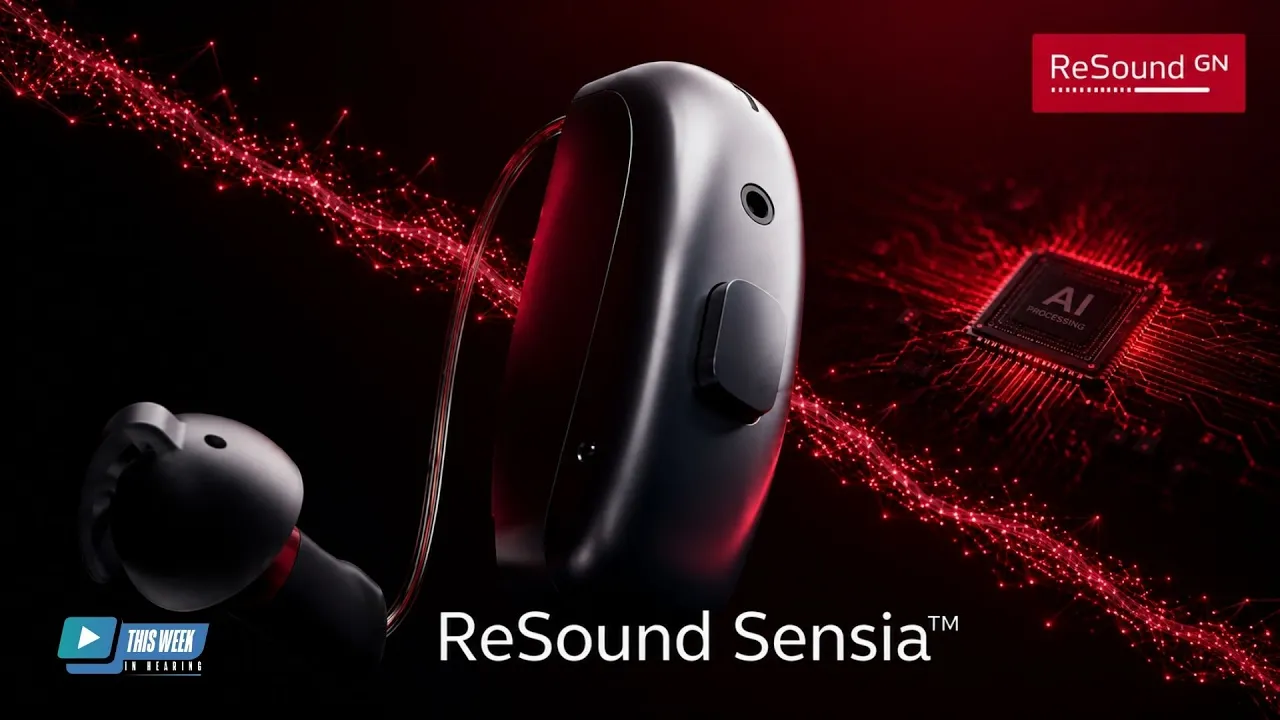
ReSound Sensia microRIE, the flagship rechargeable style in the Sensia family. According to ReSound, it’s the world’s smallest AI-powered hearing aid, combining a compact design with the company’s newest automatic hearing-in-noise technology.

On the flagship Sensia 9 microRIE, the hearing aids can now bring in DNN-powered noise reduction automatically when you need it. And ReSound has loosened the technology-level restriction too: the Sensia 7 microRIE now gets DNN processing as well.

And that theme carries through the rest of Sensia.

Rather than simply adding a new AI feature and calling it a day, ReSound has launched a much broader family, added custom hearing aids from day one, kept disposable-battery options, maintained solid battery life even with more intensive processing, and made the automatic listening experience more hands-off.

It feels like a thoughtful release.

What’s New with ReSound Sensia?

There are three main pieces of technology behind ReSound’s new approach:

AcoustIQ sound sensing, 4-microphone directional processing, and DNN-based noise reduction.

Think of AcoustIQ as the hearing aid’s decision-maker.

It continuously analyzes the sound around you and determines what kind of listening environment you’re in. Based on that information, Sensia can adjust things like directionality and noise reduction as your surroundings change.

Hearing aids have classified sound environments for years. The more important question is whether they actually do the right thing after identifying the environment.

ReSound says AcoustIQ is 88% more accurate at real-time classification and feature engagement than the closest premium competitor it tested.

That’s an impressive result, although it’s important to understand exactly what ReSound measured.

In ReSound’s testing, Sensia correctly engaged the expected directionality and gain settings across several sound scenes involving speech and noise.

One important caveat: ReSound established the criteria for appropriate behavior, and the competing hearing aids were anonymized.

So this study tells us Sensia appears very good at doing what ReSound designed it to do. It does not mean someone wearing Sensia will understand 88% more speech.

There’s another important distinction here: Sensia is a large family of hearing aids, and the feature set varies by style and technology level.

The complete Intelligent All-Around system—the version that automatically combines AcoustIQ, ReSound’s strongest directional processing, and DNN-based denoising—is reserved for the Sensia 9 rechargeable microRIE. AcoustIQ itself extends across the technology levels, while some of the newer AI features are limited to specific microRIE models.

That matters, because buying a Sensia doesn’t necessarily mean you’re getting every feature behind ReSound’s headline performance claims.

Sensia Tries to Focus on the Person You’re Looking At

When things get noisy, Sensia can use microphones across both hearing aids to create a forward-facing focus.

Why the front?

Because we usually look toward the person we’re trying to hear.

If I’m sitting across from you at dinner, there’s a pretty good chance the voice I care about is coming from the same direction I’m facing.

ReSound says its newest 4-microphone beamforming strategy improves the signal-to-noise ratio by 13% compared with its previous technology. In other testing supplied by ReSound, 83% of users experienced better speech clarity in noise compared with the closest competing solution tested.

Directional microphones themselves aren’t new. They’ve been helping hearing aid users hear speech from in front for decades.

What’s more interesting here is how ReSound combines that directional focus with its DNN-based noise reduction.

I asked Laurel Christensen, PhD, Chief Audiology Officer at GN, why that combination matters:

“DNN-based noise reduction looks for the prominent speech in the environment and then reduces everything but that speech. There are many times when the prominent speech in the environment isn’t what the hearing aid user wants to hear. For this reason, we pair a 4-microphone beamformer with our DNN. This allows the hearing aid user to look at the person they want to hear, and the beamformer will pull that speech up, making it prominent, and then the DNN will reduce everything else. Without the beamformer, the hearing aid user could be stuck listening to speech they don’t want to hear. This is a common complaint on hearing aid forums today. ”

- Laurel Christensen, PhD, Chief Audiology Officer at GN

That explanation gets to the heart of what ReSound is trying to do differently with Sensia.

The DNN isn’t being asked to magically figure out who you care about. The directional microphones first give it a clue by emphasizing the person you’re facing.

The DNN Can Now Kick In Automatically

Sensia’s rechargeable microRIE also uses a deep neural network, or DNN, called Intelligent Noise Tracker to help separate speech from unwanted background noise.

If you’ve shopped for premium hearing aids recently, you’ve probably heard the term DNN before.

In simple terms, a deep neural network is a machine-learning system trained on large amounts of sound so it can recognize patterns in speech and noise.

ReSound already had DNN-based processing in Vivia (the Sensia predecessor). What changes with Sensia is how that processing can be used.

On Vivia, accessing ReSound’s DNN processing meant manually switching into the Hearing in Noise program. Sensia 9 changes that by allowing the hearing aid to bring in DNN processing automatically when it detects that you need it—a meaningful improvement, because many users simply won’t remember to change programs when a restaurant suddenly gets noisy.

Intelligent Noise Tracker is available in the Sensia 9 and Sensia 7 rechargeable microRIE, with ReSound listing stronger DNN noise reduction in the 9. In the flagship Sensia 9 microRIE, AcoustIQ can automatically combine that DNN processing with the directional microphone system when the listening environment gets difficult. ReSound calls this Intelligent All-Around.

The goal isn’t simply to turn down noise. It’s to help the conversation in the direction you’re facing stand out from everything competing with it.

If you like to get in the weeds a bit, here's a detailed look at what's new in Sensia:
Hearing tech expert Andrew Bellavia speaks with GN's Laurel Christensen, Chief Audiology Officer, and Brian Dam Pedersen, Chief Technology Officer, about the technology behind Sensia.

I like that approach. Even the best hearing aid feature doesn’t do much good if the person wearing the hearing aids never activates it.

There is one important exception to that “automatic is better” theme: music. If you’re listening to music, I’d still recommend manually selecting ReSound’s dedicated Music program. Music and speech have very different processing needs, and the dedicated program is designed to preserve more of the sound rather than aggressively optimizing for speech.

The Early Research Behind Sensia Is Promising

ReSound has put quite a bit of evidence behind Sensia, which I appreciate.

In one blinded test involving experienced hearing aid wearers, a target speaker was positioned directly in front while another speaker off to the side was actually 5 dB louder.

That’s an interesting test because it recreates the exact problem Sensia is trying to solve: the person you want to hear isn’t necessarily the loudest person in the room.

According to ReSound, 80% of participants had better audibility of the intended speaker with Sensia than with the competing DNN-powered hearing aid. ReSound also cites testing from Hörzentrum Oldenburg supporting the combination of directional beamforming and DNN noise reduction for keeping the intended speaker more audible in competing speech.

Those results are encouraging.

But much of the launch evidence was supplied or commissioned by ReSound, and the competing products aren’t identified. That’s normal in this industry, but it’s still worth pointing out.

I’ll be particularly interested to see how Sensia performs in independent HearAdvisor testing, and ultimately what customer reviews and return rates look like compared with ReSound Vivia and other flagship hearing aids.

The next step is seeing whether those advantages carry over into independent testing and everyday use.

ReSound Finally Launches the Whole Family Together

One of my favorite things about Sensia has almost nothing to do with AI.

There are a lot of styles.

When ReSound launched Vivia, the focus was on RIE-style hearing aids. Sensia comes out of the gate as a much more complete family.

There’s a rechargeable microRIE, traditional RIE models powered by either a size 312 or size 13 disposable battery, a size 312 custom ITC, rechargeable ITC and ITE custom hearing aids, and a tiny size 10A CIC.

I’m glad ReSound did this.

Entire family of sensia styles
ReSound Sensia launches with an unusually broad lineup, including rechargeable and disposable-battery RIEs, custom ITC and ITE models, and a tiny CIC—giving users far more choice in style and power than we saw with the Vivia launch.

Keeping everything under the Sensia name makes shopping simpler, and I particularly like that ReSound kept disposable-battery RIE models.

Rechargeables are great for many people, but they aren’t right for everyone. Some people travel extensively, have unpredictable schedules, or simply prefer changing a battery in 30 seconds instead of worrying about charging.

Sensia gives you that choice.

The size 13 RIE is also the Sensia option for people who want a built-in telecoil. And across the lineup, Sensia hearing aids are IP68 rated for resistance to dust and moisture.

Sensia Delivers All-Day Battery Life Even with AI Processing

ReSound rates its rechargeable Sensia models for about 24 hours of typical use, with up to 30 hours under lighter-use conditions. Even with roughly half the day spent streaming, ReSound estimates about 20 hours of battery life.

Those numbers are solid, but what stands out is that the Sensia microRIE can maintain all-day battery life while automatically using DNN-based noise reduction in the flagship model.

AI processing requires power, and ReSound says its DNN is 17 times more efficient than a competing DNN-based solution. The practical benefit is advanced noise reduction without giving up all-day battery life.

Bluetooth LE Audio and Auracast Are Here Too

Sensia’s wireless models support Bluetooth Low Energy Audio and Auracast.

Auracast is one of the more interesting developments happening in hearing aid connectivity. In simple terms, it allows compatible hearing aids to receive audio broadcasts from supported TVs, public venues, and other transmitters.

You can find and select Auracast broadcasts through the Auracast Assistant in ReSound’s Smart 3D app. Sensia also works with accessories including the TV-Streamer+ and Multi-Mic+.

Direct streaming from compatible iOS and Android devices is available across the wireless Sensia models. The tiny CIC is the exception—it’s a non-wireless hearing aid.

Hands-free calling is also style-dependent. ReSound’s professional materials specify that it isn’t available on the CIC or the disposable-battery ITC.

For people with single-sided deafness, ReSound offers a rechargeable Sensia microRIE CROS transmitter, which can be paired with Sensia RIE hearing aids on the better-hearing ear.

And for people using a Cochlear Nucleus cochlear implant on one side and a hearing aid on the other, ReSound also offers dedicated Sensia bimodal options.

My Early Take on ReSound Sensia

I went into Sensia already liking the product it replaces. That probably makes me a little harder to impress, because Vivia was a very good hearing aid. But ReSound didn’t simply put a new name on Vivia and give us a slightly better DNN.

They addressed one of my biggest usability complaints by making their strongest AI-powered noise processing automatic in the flagship model. They expanded DNN processing down to the Sensia 7 microRIE. They launched custom hearing aids at the same time. They kept disposable batteries for people who want them. And they did all of that while maintaining legitimate all-day battery life.

Those are thoughtful improvements.

Just keep in mind that Sensia is a family, not one identical hearing aid in different shells.

The Sensia 9 rechargeable microRIE gets ReSound’s complete Intelligent All-Around system. The Sensia 7 microRIE still gets DNN-powered Intelligent Noise Tracker, while the disposable-battery RIEs and custom models have their own feature sets.

I still want independent testing. I still want to see what actual wearers say after these have been out for a while.

But I give ReSound a lot of credit for this release. Sensia feels like the company listened to what worked with Vivia, listened to what could be better, and made meaningful changes rather than chasing a longer feature list.

For someone whose biggest hearing challenge is following the right person in a room full of competing voices, Sensia is one of the most interesting new hearing aids I’ve seen from ReSound in a long time.

ReSound Sensia at a glance

Sales popularity of Sensia vs.

over the last 60 days

Relative sales popularity of ReSound models over time, based on our internal sales data. Updated weekly. Click on a model name to remove/bring back it from the chart comparsion

Sales stats for Sensia

Based on our internal sales data. Updated daily.

BOUGHT BY 1.7% of our customers who've bought ReSound in the last 90 days
RETURNED BY 0% of customers during their 45 day trial period for a 100% refund
ZipHearing Return Policy We think you'll love your new hearing aids. But if you don't, return them for a 100% refund within 45 days. No restocking fees, no fine print.

Your savings through ZipHearing

Based on retail pricing figures from HearingTracker.com.

Average retail
OUR PRICE FOR
RESOUND SENSIA IS
13% less
than the national average price
ZipHearing Price

ReSound's product naming convention

ReSound
Brand
Sensia
Generation
9
Tech level
microRIE
Style

Sensia tech levels our customers buy

Based on internal sales data. Updated daily.

Hearing Aids prices range 100%
Tech level % of sales
Sensia 9 100%
Sensia 7 0%
Sensia 5 0%
Sensia 4 0%

ReSound Sensia models

Sorted by popularity. Based on our internal sales data. Updated daily.

RATING 1
ReSound Sensia Sensia microRIE hearing aid Sensia microRIE
Sensia microRIE

Receiver-in-ear style with a lithium-ion rechargeable battery.

100%
100% of our customers choose this model
0%
0% of our customers returned this model for a full refund
RATING 2
ReSound Sensia Sensia RIE 312 hearing aid Sensia RIE 312
Sensia RIE 312

Receiver-in-ear style with a disposable size 312 battery.

0%
0% of our customers choose this model
0%
0% of our customers returned this model for a full refund
RATING 3
ReSound Sensia Sensia RIE 13 hearing aid Sensia RIE 13
Sensia RIE 13

Receiver-in-ear style with a disposable size 13 battery and built-in telecoil.

0%
0% of our customers choose this model
0%
0% of our customers returned this model for a full refund
RATING 4
ReSound Sensia Sensia Rechargeable ITC hearing aid Sensia Rechargeable ITC
Sensia Rechargeable ITC

Custom in-the-canal hearing aid with a lithium-ion rechargeable battery.

0%
0% of our customers choose this model
0%
0% of our customers returned this model for a full refund
RATING 5
ReSound Sensia Sensia ITC 312 hearing aid Sensia ITC 312
Sensia ITC 312

Custom in-the-canal hearing aid with a disposable size 312 battery.

0%
0% of our customers choose this model
0%
0% of our customers returned this model for a full refund
RATING 6
ReSound Sensia Sensia Rechargeable ITE hearing aid Sensia Rechargeable ITE
Sensia Rechargeable ITE

Custom in-the-ear hearing aid with a lithium-ion rechargeable battery.

0%
0% of our customers choose this model
0%
0% of our customers returned this model for a full refund
RATING 7
ReSound Sensia Sensia CIC hearing aid Sensia CIC
Sensia CIC

Custom completely-in-canal hearing aid with a disposable size 10A battery. This model is non-wireless, so it does not offer Bluetooth streaming or app connectivity.

0%
0% of our customers choose this model
0%
0% of our customers returned this model for a full refund
RATING 8
ReSound Sensia Sensia CROS hearing aid Sensia CROS
Sensia CROS

Rechargeable microRIE-style CROS transmitter for people with single-sided deafness or certain types of asymmetrical hearing loss.

0%
0% of our customers choose this model
0%
0% of our customers returned this model for a full refund

ReSound Sensia 9 vs 7 & more

This is a heavily abbreviated chart designed to focus only on the key differences between models. Features that exist across all technology are not listed below unless they`re necessary to provide context for other features listed. Swipe right to see more features, tap on a feature to read its description.

Model 4 5 7 9
Sales popularity 0% 0% 0% 100%
Return rate N/A N/A N/A N/A
Tech level Low Mid Advanced Premium
Channels 12 12 14 17
Intelligent All-Around
360 All-Around Directionality
All Access Directionality
Binaural Directionality III
Intelligent Focus
Clear Focus
Front Focus
Ultra Focus
Environmental Optimizer II
Environmental Optimizer I
Impulse Noise Reduction 2 settings 2 settings 3 settings 3 settings
Noise Tracker II 2 settings 3 settings 4 settings 5 settings
Streaming Bass Boost 2 settings 2 settings 3 settings 3 settings
Wind Guard 2 settings 2 settings 3 settings 3 settings
Intelligent Noise Tracker on/off 3 settings
Sound Enhancer (ReSound Smart 3D app)

*some features may not apply to all models on this page

For a more detailed comparison, see ReSound`s feature matrix

ReSound Sensia reviews

Summary

Showing 0 - 0 of 0 total reviews Clear all filters

Sorry, we dont have any written reviews yet.
Not what you're looking for? See more ReSound hearing aid reviews

Common questions about ReSound Sensia hearing aids

Bluetooth / Connectivity Rechargeability Disposable Batteries Controls/Apps Miscellaneous

Choose questions category:

Is this hearing aid Bluetooth compatible?
Yes. ReSound Sensia supports Bluetooth LE Audio and Auracast for direct audio streaming from compatible smartphones and other devices. Bluetooth is available on the wireless Sensia models, but not the non-wireless CIC.
Does this hearing aid allow for hands-free phone calls?
Yes, with compatible iPhones and iPads. Hands-free calling is not available on the CIC or battery-powered ITC. Android compatibility varies by phone, so we recommend checking your specific model before purchasing.
Can this hearing aid be paired directly to my Bluetooth TV?
Not to most Bluetooth TVs the way you would pair Bluetooth headphones. ReSound recommends the TV-Streamer+, which sends TV audio directly to the hearing aids using Auracast. If your TV has built-in Auracast broadcasting, Sensia can also receive an Auracast broadcast directly.
How many hours a day do the batteries last?
ReSound rates Sensia for about 24 hours of typical use on one charge, with up to 30 hours depending on use. Expect around 20 hours if you're streaming for roughly half the day.
What is the lifespan of the rechargeable batteries?
The lithium-ion battery is built into the hearing aid and designed to last for the normal service life of the device—roughly five years. As with any rechargeable battery, capacity can gradually decline with age and use.
How will I know when my battery needs to be charged?
The hearing aids give you a low-battery warning, and you can check battery status in the ReSound Smart 3D app. The app can also notify you when the rechargeable batteries are running low.
What if I'm on-the-go and my battery dies?
The optional Premium Charger for the microRIE has its own built-in battery and provides up to three days of portable charging without being plugged into an outlet. If running out of power is a major concern, Sensia is also available in size 312 and size 13 disposable-battery RIE models.
How long does it take to get a full charge?
Plan on about three hours for a full charge. Most people simply put the hearing aids in the charger overnight.
Does the charger include a dehumidifier?
No. ReSound’s Sensia chargers are designed for charging and storage, not active dehumidification. If moisture is a concern, a separate hearing aid dryer or dehumidifier can be used.
How long do the batteries last?
It depends on the style, battery size, streaming and daily use. ReSound says zinc-air batteries in digital hearing aids typically last around 5–7 days. Sensia offers size 312 and larger size 13 batteries in its RIE models, while the CIC uses a smaller size 10A battery. Generally, the larger size 13 will last longer than the smaller batteries.
How will I know when it's time to change the battery?
The hearing aids provide an audible low-battery warning before the battery dies. On wireless models, battery status can also be monitored through the ReSound Smart 3D app.
Are the batteries hard to change?
Not usually. You open the battery door, remove the old battery and insert a new one. The batteries are small, though, so if you have significant dexterity or vision issues, the rechargeable Sensia may be easier to manage.
How can I control this hearing aid, and which settings can I control?
You can use the physical controls on the hearing aids or the ReSound Smart 3D app. Depending on your Sensia model and programming, the app lets you adjust volume, change listening programs, fine-tune bass, mid and treble, adjust speech and noise settings, check battery status, save favorite settings and connect to Auracast broadcasts. Your hearing care provider can also send remote adjustments through ReSound Assist.
How do I turn this hearing aid on and off?
Rechargeable Sensia models can be turned on and off using the hearing aid controls and will also shut down while charging. On disposable-battery models, closing the battery door turns the hearing aid on and opening it turns it off.
Does the app have a “Find My Hearing Aid” feature?
Yes. The ReSound Smart 3D app includes a Find My Hearing Aid feature that can help you locate misplaced hearing aids.
Is this hearing aid CROS compatible?
Yes. ReSound offers a rechargeable Sensia microRIE CROS transmitter for people with single-sided deafness, and it is compatible with the microRIE style hearing aid.
Can I get this hearing aid with a telecoil?
Yes, but only in the Sensia RIE 13 model with a size 13 zinc-air battery. The microRIE and custom Sensia models do not have a built-in telecoil. If you choose one of those models, ReSound’s Multi-Mic+ accessory can provide similar functionality, while also adding access to Auracast broadcast audio and helping with speech in noisy environments.
Is this hearing aid compatible with Cochlear™ devices?
Yes. ReSound offers a Sensia Bimodal solution designed to work alongside compatible Cochlear Nucleus cochlear implant sound processors. This allows someone using a cochlear implant in one ear and a hearing aid in the other to use the two systems together.

Compatible apps & accessories

Apps (by popularity)

Smart 3D app

Take control of your hearing aids. Adjust sound settings such as volume, program, base, treble, and even create custom programs based on specific listening environments. Use the app to find your hearing aids if you lose them, check the status of your rechargeable battery, and provide soothing sounds for tinnitus relief. In some cases, your hearing provider can even make remote adjustments to your hearing aids through the app.
RATING 2
ReSound Tinnitus Relief app app
Tinnitus Relief app

Tinnitus Relief app

The ReSound Relief app is arguably the most advanced app available for managing tinnitus. It includes soothing sounds and imagery, guided meditation, breathing and relaxation exercises, and practical tips that are easy to understand and apply. If you have an iPhone, you can stream the soothing sounds from the app directly to your hearing aids. Some newer Android phones running the latest versions of Android can also stream these sounds directly to the hearing aids. In the past, Android users whose phones did not support direct streaming could use the Phone Clip+ accessory to stream audio from the app. However, as of December 31, 2025, ReSound has discontinued the Phone Clip+, meaning Android users without native streaming support currently have no way to stream audio from the Relief app to their hearing aids until a replacement accessory is announced.

*Double tap on the app to open it in the store

Accessories (by popularity)

RATING 1
*Included with microRIE rechargeable orders
ReSound Standard Charger accessory
Standard Charger, $149

Standard Charger, $149

*Included with microRIE rechargeable orders

This is the charger that comes with all Sensia microRIE rechargeable orders. Fully charges hearing aids in 3 hours, providing 24 hours of power. A quick charge takes 30 minutes and will provide 8 hours of power.
RATING 2
ReSound Premium Charger accessory
Premium Charger, $199

Premium Charger, $199

Compatible with Sensia micro RIE rechargeable hearing aids. The premium charger is just like the standard charger, but with it's own built-in battery that stores 3 full charges. This reserve power is handy if you need to charge your hearing aids but don't have access to electricity. Fully charges hearing aids in 3 hours, providing 24 hours of power. A quick charge takes 30 minutes and will provide 8 hours of power.
RATING 3
ReSound Desktop Charger accessory
Desktop Charger, $79

Desktop Charger, $79

This is an optional charger for the Sensia microRIE rechargeable aids. Fully charges hearing aids in 3 hours, providing 24 hours of power. A quick charge takes 30 minutes and will provide 8 hours of power. This charger does not have an internal power bank, so it must be plugged in to charge your hearing aids.
RATING 4
ReSound TV Streamer+ accessory
TV Streamer+, $199

TV Streamer+, $199

The ReSound TV Streamer+ is a practical solution for enhanced TV listening experiences in your home. This device is designed to help you enjoy clear, customizable sound from your TV directly in your ReSound Nexia hearing aids. It effortlessly streams high-quality sound with speech clarity to your hearing aids, allowing you to set the volume to your personal preference, while allowing others in the room to enjoy the volume at their preferred levels. The TV Streamer+ is Bluetooth® Auracast™ compatible, so if multiple family members have Nexia hearing aids, they can also connect easily to the TV-Streamer+ and share the enhanced TV audio experience.
RATING 5
ReSound Multi-Mic+ accessory
Multi-Mic+, $359

Multi-Mic+, $359

If you have a hard time hearing in noise this accessory is a lifesaver. Attach this microphone to a companion's shirt and their voice will stream directly to your hearing aids. Their voice will come through much stronger than all the competing noise in the environment. The Multi-Mic + uses the next generation Bluetooth LE Audio, which means better sound quality, reduced latency, and better battery life. It is compatible with all Vivia models.
RATING 6
*Included with ReSound in-the-ear orders
ReSound Custom charger accessory
Custom charger, $140

Custom charger, $140

*Included with ReSound in-the-ear orders

Designed specifically for rechargeable Sensia ITC and ITE hearing aids, the Custom Charger makes overnight charging simple with easy inductive charging—just place the hearing aids into their dedicated charging slots and leave them there when not in use. It’s intended for everyday charging at home and does not have a built-in battery for charging on the go. A full charge provides about 24 hours of typical use, enough to comfortably get most users through a full day.
Models

KEY FEATURES