


Oticon Reveal Review: Dual AI, Meaningful Upgrades, and What Actually Matters

Hearing Aid Specialist

Brad Ingrao
Editor & Doctor of Audiology
At this very moment, pretty much every major hearing aid manufacturer is racing toward the same goal: use artificial intelligence to separate speech from background noise more effectively.
If you’ve ever tried to follow a conversation in a busy restaurant, you know exactly why hearing aid companies are obsessed with making speech stand out.
But Oticon is taking a slightly different approach with its newest hearing aid, Reveal.
Their argument is that hearing clearly isn’t simply about stripping away everything that isn’t speech. Your brain also relies on the sounds around a conversation—the clatter of dishes, footsteps, music, traffic, and other voices—to figure out where you are and what’s happening.
In other words, real life isn’t a podcast. You don’t hear one perfectly isolated voice floating in silence.
So instead of using AI solely to make speech clearer, Reveal introduces two AI systems working together: one focused on speech and another focused on preserving useful environmental context. Oticon calls it the world’s first Dual AI hearing aid system.
If that approach sounds familiar, it’s because it’s not some brand-new idea. Signia has been doing something similar for years, using two separate processors to handle speech and surrounding sounds independently. What’s different here is that Oticon has essentially taken that same general concept and handed more of the job over to AI.
First, the Basics: Reveal Styles and Technology Levels
Before we disappear too far down the AI rabbit hole, let’s cover what’s actually been ‘revealed’.
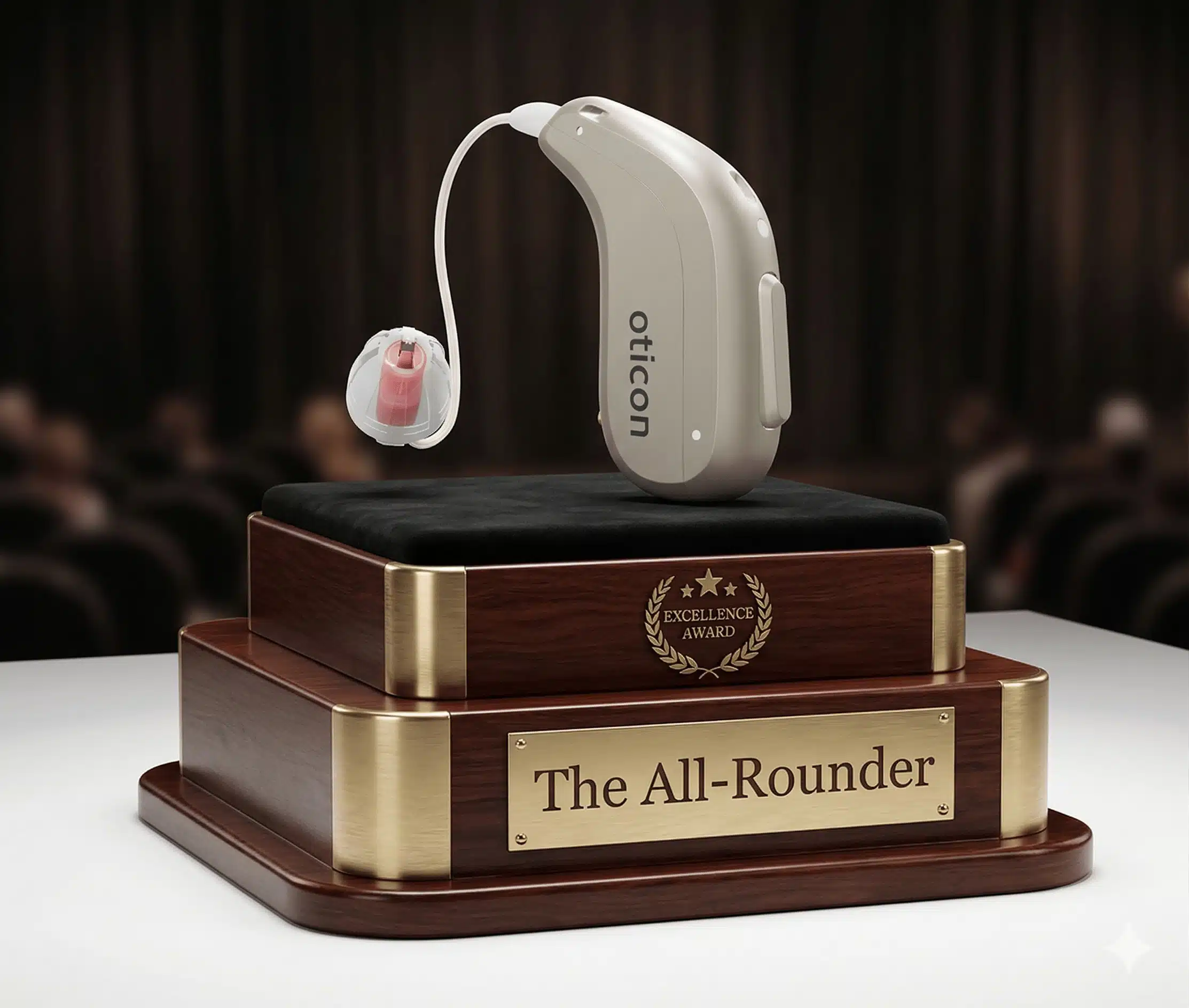
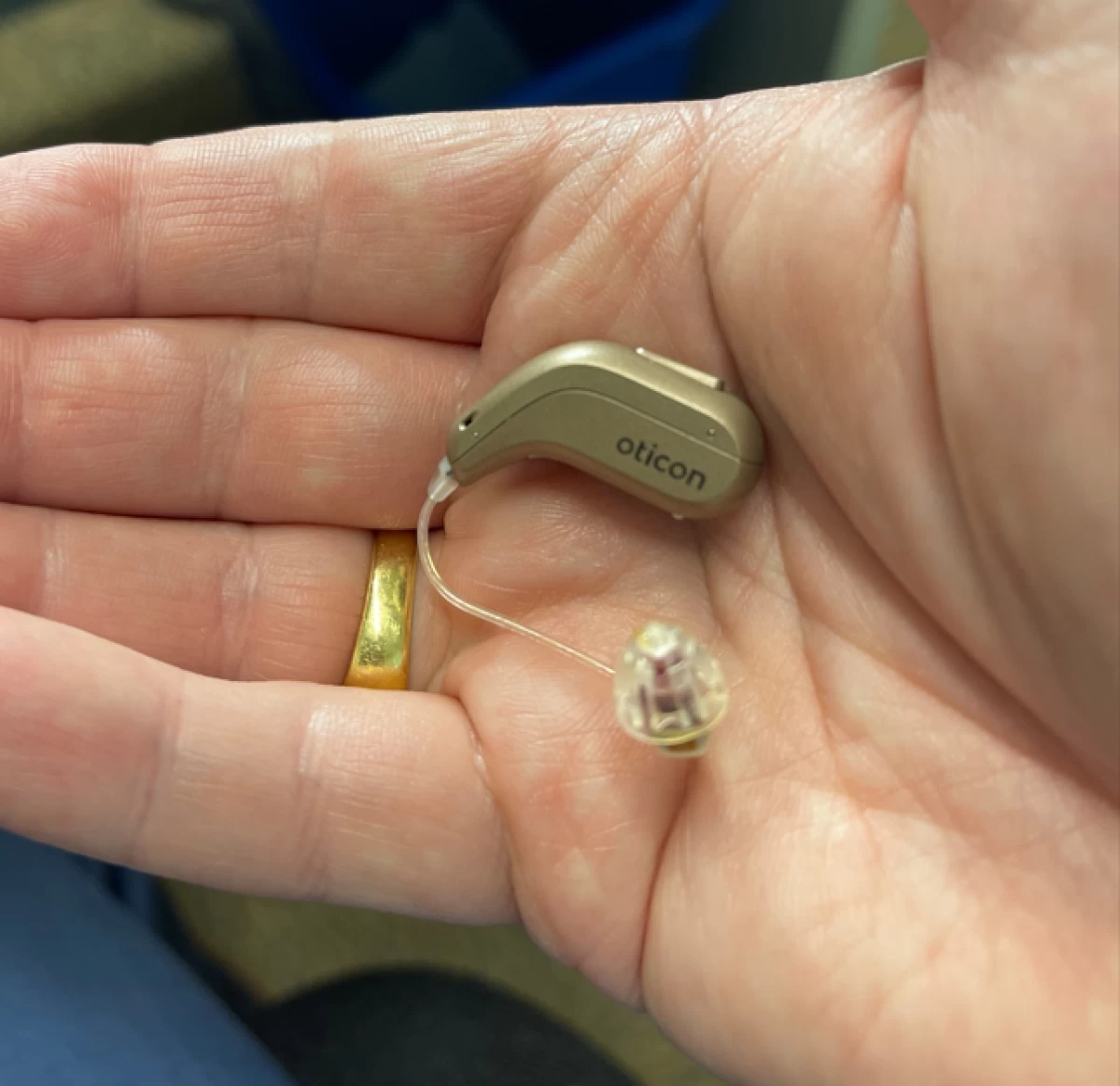
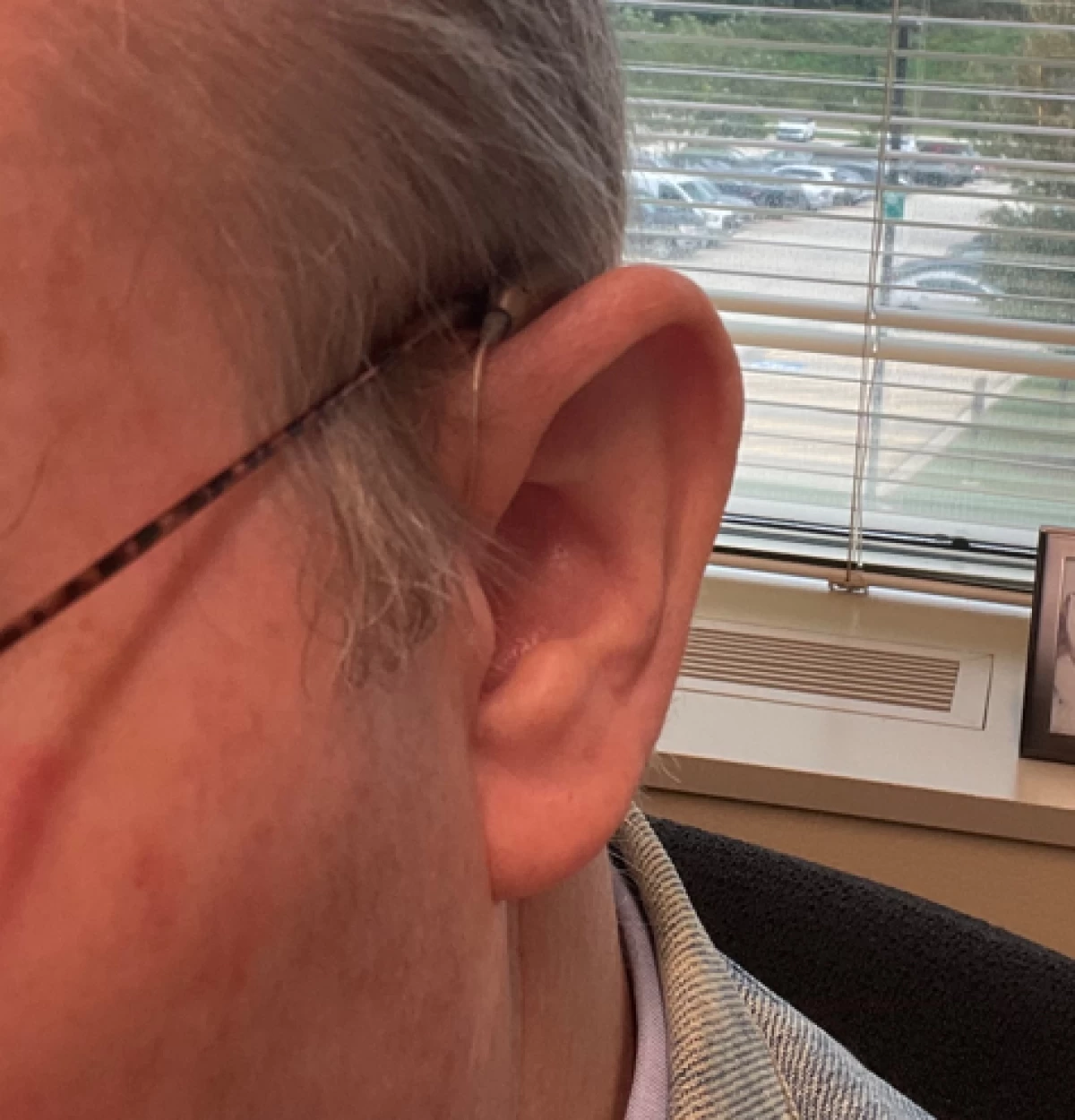
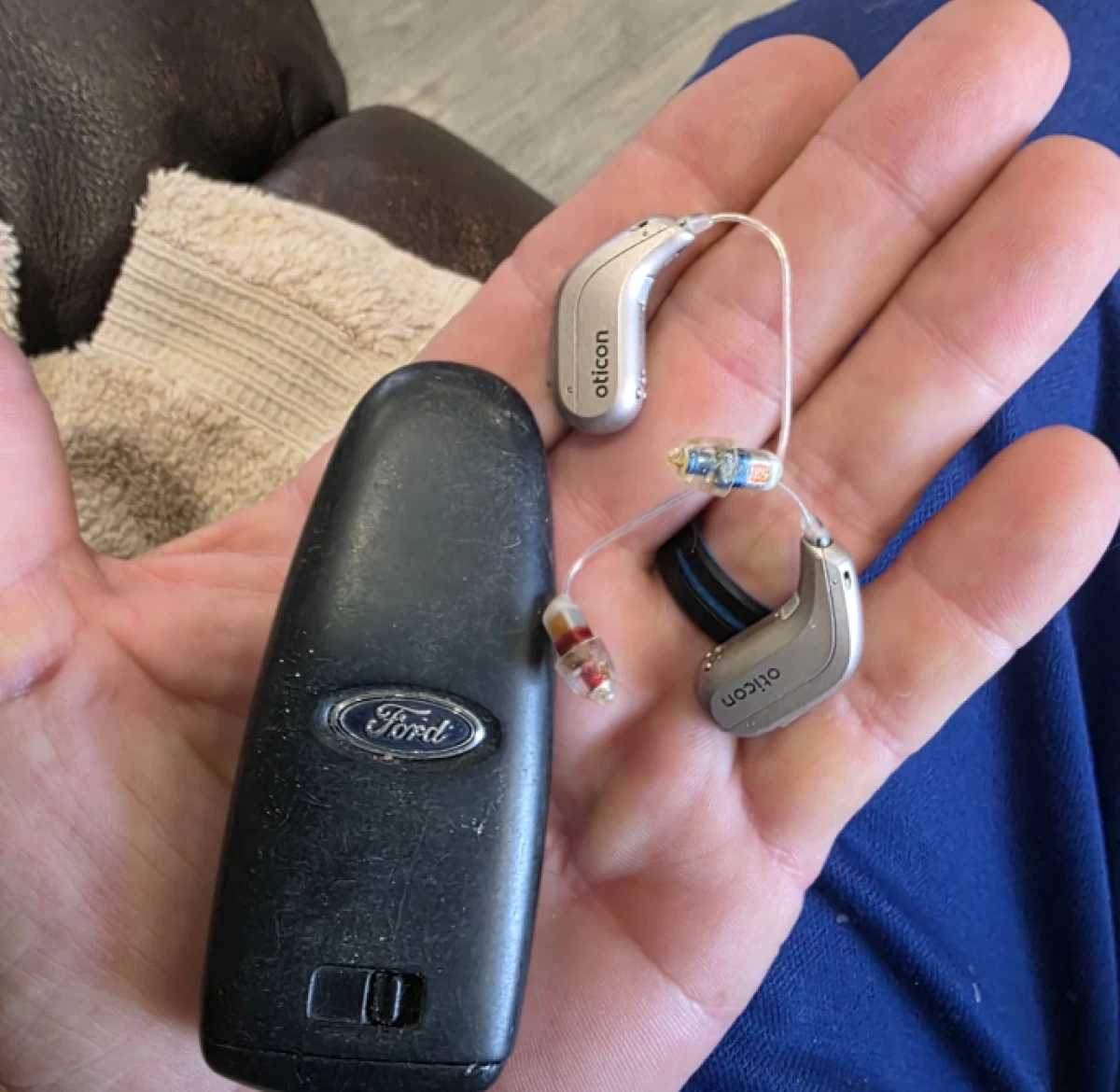
Oticon Reveal launches as a rechargeable miniRITE R, Oticon’s version of the popular receiver-in-canal hearing aid. The main body sits discreetly behind your ear, while a thin wire connects to a small receiver—or speaker—inside the ear canal.

Reveal is offered in four technology levels: Reveal 1, 2, 3, and 4, with Reveal 1 as the premium model.
Reveal is designed around all-day rechargeable use.
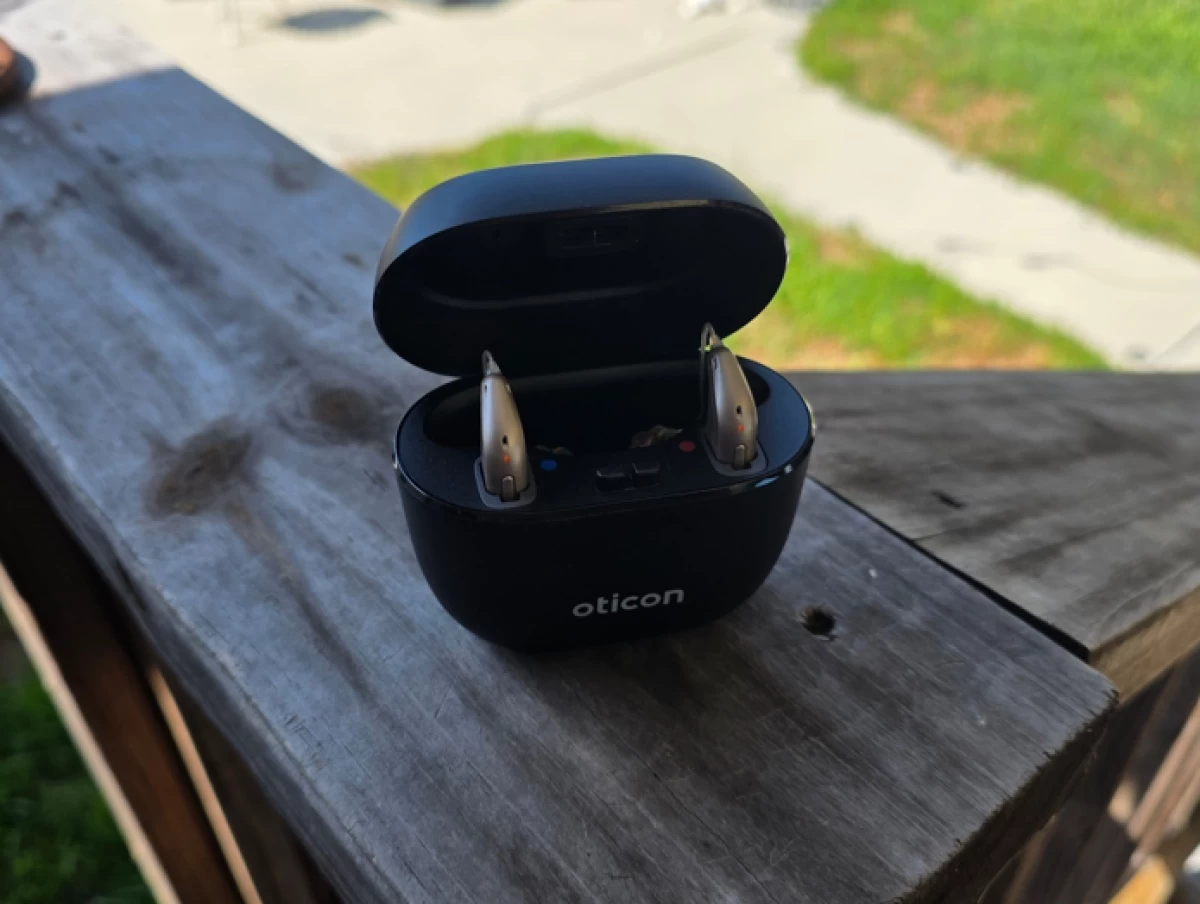
Oticon says a one-hour charge can provide up to 16 hours of power using either the desk charger or portable SmartCharger (details below).
As always, take hearing aid battery numbers as estimates rather than guarantees.
Your hearing loss, the amount of amplification required, streaming habits, wireless accessories, battery age, and listening environments can all affect how long they actually last.
As with most hearing aid families, moving up the range generally gives your hearing care provider access to the most sophisticated versions of the sound-processing features. If you spend a lot of time in restaurants, meetings, group conversations, or other complicated listening environments, that higher-end technology is typically where I’d start the conversation, and it’s what the vast majority of ZipHearing readers will buy.
What's New with Oticon Reveal
Reveal builds on much of what Oticon introduced with Intent rather than throwing everything out and starting over.
The 4D Sensor technology remains, but Reveal adds its new Dual AI processing, upgraded wind and handling noise management, a more precise feedback system, and an entirely new wireless platform with improved streaming and Auracast support.
The headline feature, though, is definitely Dual AI.
Dual AI: Speech AI + Context AI
To understand what Oticon is trying to accomplish, it helps to think about how your brain actually hears.
Your ears collect sound, but your brain is ultimately responsible for figuring out what all that sound means.
Imagine sitting in a restaurant with a friend.
Obviously, you want to hear your friend’s voice. But your brain is also picking up the server approaching, silverware hitting a plate, music overhead, and conversations happening at nearby tables.
Some of those sounds are distracting.
Others tell you what’s happening around you.
Oticon’s philosophy has long been built around giving the brain access to a relatively open sound scene rather than aggressively shutting down everything outside a narrow listening beam. With Reveal, they’re pushing that idea further.
Speech AI searches your environment for voices and works to make them clearer.
Context AI separately processes the surrounding environmental sounds.
The goal is to keep speech clear without stripping away so much other information that the world starts to sound artificial or disconnected.
And I think that distinction is important.
There is such a thing as too much noise reduction. A hearing aid might make one voice extremely prominent, but if everything surrounding that voice disappears, the listening experience can start to feel unnatural.
Reveal is designed to find a better balance between the two.
You Can Still Prioritize Speech
Now, this doesn’t mean Reveal simply opens the microphones and lets every sound come blasting through.
That would be miserable.
The Speech AI can be configured with three listening ranges depending on how much help you need in background noise.

Front provides the strongest emphasis toward speech in front of you and may make sense for somebody who really struggles in noise. Wide, the default, opens things up farther. And Full provides access to an even broader range of voices around you.
On the surface, that probably sounds a little like traditional directional microphone technology.
Oticon says the underlying processing works differently, but from a wearer’s perspective, the more important question is pretty simple:
Can I hear the person I care about without feeling completely cut off from everything else happening around me?
That is really what Reveal is trying to accomplish.
4D Sensor Technology Returns
I was glad to see Oticon retain the 4D Sensor technology introduced with Oticon Intent.
When you’re struggling to hear someone, you naturally give away a surprising amount of information about who you’re trying to listen to.
You turn toward them. You lean closer. You stop walking. Or, in a group conversation, you repeatedly turn your head as different people begin speaking.
Reveal’s built-in motion sensors recognize some of that behavior and combine it with information about your acoustic environment.
Think of those sensors as another set of clues.
If you’re standing still and facing one person, the hearing aids can infer that the person in front of you is probably pretty important.
If you’re constantly turning between several talkers, Reveal can recognize that you’re likely participating in a group conversation and adjust the sound scene accordingly.
It was clever technology when Oticon introduced it in Intent, and I’m glad they kept it.
The bigger point is that hearing aids are increasingly moving beyond simply asking, “Where is the loudest voice?”
They’re trying to figure out, “What is the person wearing these hearing aids actually trying to hear?”
That’s a much more interesting problem to solve.
Better Wind and Handling Noise Reduction
Dual AI will get most of the attention, but some of Reveal’s less glamorous upgrades could make just as much difference in everyday life.
First is Wind and Handling Stabilizer 2.0.
If you’ve ever worn receiver-in-canal hearing aids outside on a windy day, you know how quickly wind hitting the microphones can ruin a conversation.
According to Oticon, Reveal can provide up to 40 dB of attenuation for wind and handling noise, 10 dB more than its previous technology. That includes wind, hair brushing across the microphones, and noises created when you physically touch the hearing aids.
Forty decibels sounds impressive, but remember: this is manufacturer testing. Real-world performance will depend on your hearing loss, fitting, and environment.
Still, wind is one of those problems patients complain about all the time, so I pay attention when manufacturers make meaningful improvements here.
Reveal Optimizer Improves Feedback Management
Reveal also introduces a new feedback-management system called Reveal Optimizer.
Feedback is that familiar high-pitched whistle a hearing aid can produce when amplified sound escapes the ear and gets picked up again by the microphones.
But stopping whistling isn’t the only reason feedback management matters.
If the system becomes too aggressive, it may reduce amplification that you actually need for speech clarity.
Oticon says Reveal Optimizer responds 30% faster, operates with four times greater precision, and provides up to 4 dB more stable gain than its previous system.
For someone who requires a lot of amplification or whose fitting sits close to the feedback limit, that could be meaningful.
But no algorithm replaces getting the physical fitting right. If your hearing loss calls for a more closed dome or custom earmold, fancy feedback management shouldn’t be used to avoid one.
Reveal Gets an Entirely New Connectivity Platform
Connectivity is another meaningful Reveal upgrade.
Oticon says its new platform provides its best-ever streaming range and connection stability. Reveal can stream calls, music, podcasts, videos, and other audio directly from compatible Apple and Android devices.
One new feature is Streaming Comfort.
When you’re streaming through hearing aids, the microphones are still picking up some amount of the world around you.
Sometimes that’s useful.
Other times you’re trying to listen to a podcast while somebody is banging pots around the kitchen and you’d rather hear a little less of the kitchen.
Streaming Comfort automatically manages those surrounding sounds based on your environment, with the goal of making streamed audio easier to listen to.
Reveal also supports Auracast, which allows compatible hearing aids to connect directly to supported audio broadcasts.
Eventually, that could mean walking into an airport and hearing a gate announcement directly through your hearing aids, connecting to a theater’s audio system, or listening to a compatible TV without a dedicated streamer.
We’re still early in Auracast adoption, so I wouldn’t buy Reveal solely because you expect every public venue to support this tomorrow. But I do like seeing it included.
My Take: We’re Entering the “Splitting-Hairs” AI Era of Hearing Aids
At this point, every major hearing aid manufacturer seems to agree on one thing: AI-powered sound processing is the future.
And importantly, this isn’t all marketing fluff. We’ve seen real gains in speech-in-noise performance over the last several years, and AI has played a meaningful role in that progress. In fact, some of those gains may be among the biggest improvements we see for a while.
The debate now isn’t whether AI works.
It’s whose implementation works best.
Oticon says the answer is Dual AI. Phonak takes a different approach. ReSound, Signia, Starkey, and Widex all have their own versions of neural networks, environmental processing, directionality, and noise reduction.
And if you’re an average person shopping for hearing aids, good luck sorting through all of that.
I think we’re entering something of a splitting-hairs era at the premium end of hearing aids.
That doesn’t mean the differences are meaningless. A small improvement in speech understanding can matter enormously when you’re the person struggling in a restaurant.
But the distinctions are getting more nuanced.
Ten years ago, the big story might have been rechargeability or direct Bluetooth streaming. Today, we’re debating whether one AI model preserves context better, another separates speech more aggressively, or a second neural network provides a measurable advantage.
That’s why independent testing matters more than ever.
Oticon Intent already performed extremely well in HearAdvisor testing, so Reveal is replacing a hearing aid that set a very high bar. I’m interested in Dual AI, but I want to see the independent results.
Does Reveal improve speech in noise? Does it outperform Intent? Does preserving more contextual sound actually improve the listening experience?
Because now that virtually every premium hearing aid has an impressive AI story, the marketing claims are getting bigger while the differences themselves are getting harder to parse.
And that’s really where we are now.
AI has already delivered some major gains. The next battle is proving which increasingly nuanced implementation actually works best when the hearing aids are sitting on your ears.
Hearing Aid Specialist
Brad Ingrao
Editor & Doctor of Audiology

->getDescriptorURL()?>)







![Preview for the "Phonak Hearing Aid Models & Prices [2026 Version]" video](https://cdn.ziphearing.com/dist/dynamic/files/videos/365/thumbnail/version/1/1200/thumbnail.avif "Phonak Hearing Aid Models & Prices [2026 Version]")

![Preview for the "Oticon Hearing Aids Models and Prices [2026 Version]" video](https://cdn.ziphearing.com/dist/dynamic/files/videos/400/thumbnail/version/1/1200/thumbnail.avif "Oticon Hearing Aids Models and Prices [2026 Version]")