

Best Hearing Aids of 2026: An Independent, Data-Driven Ranking
Independent 2026 rankings powered by nationwide sales data and thousands of analyzed transactions. No "pay-to-play"—just real-world performance points from actual users.

Published March 31, 2026
Updated April 3, 2026
2026 has been a banner year for hearing technology. High-speed AI processing, universal Bluetooth streaming, rechargeable batteries, and robust remote-app controls have finally become the industry standard.
While these advancements are great for your hearing, they’ve made the array of available models dizzyingly large.
Sadly, making it even harder to choose is the fact that most “Best of 2026” lists are just thinly veiled advertisements from affiliate marketers who are paid to rank certain brands.
You won’t find that here. We don't accept "pay-to-play" placements.
Instead, we’ve analyzed thousands of nationwide transactions and real-world data points to curate this list of our top 3 favorite hearing aids—the only models that truly earned their spot this year.
The Top 3 Hearing Aids of 2026
When we combined customer reviews, return rates, head-to-head trial results, lab testing, and provider feedback, these were the three hearing aids that separated themselves from the pack.
#1: Oticon Intent
The All-Rounder
A remarkably balanced hearing aid with elite sound processing, strong real-world performance, and some of the most interesting sensor-driven technology currently available.
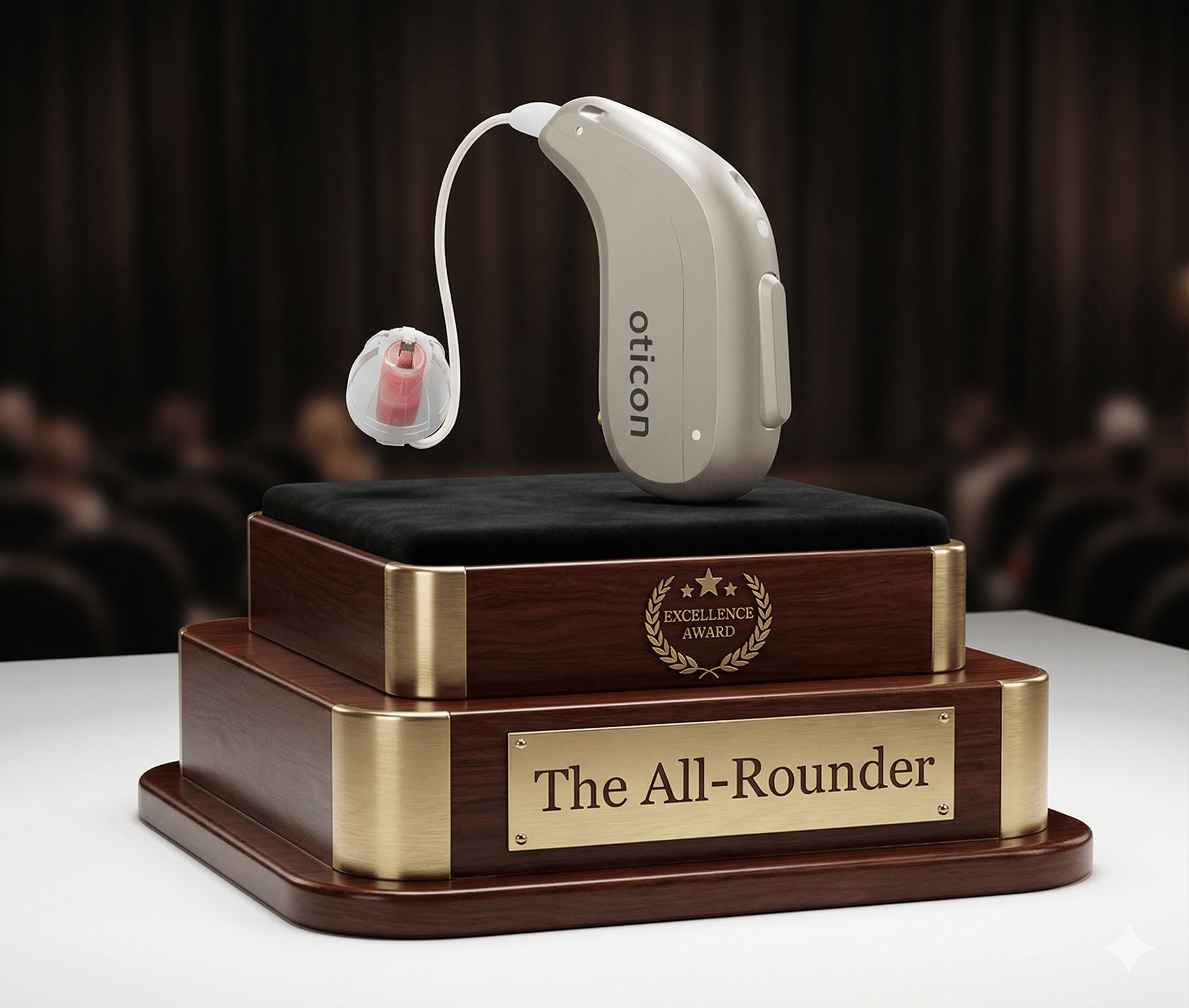
Oticon Intent earned the top spot because it performed at a high level across multiple categories rather than relying on one standout strength. It pairs very strong sound processing with solid real-world results, and its sensor-driven approach gives it a slightly different feel from more conventional premium hearing aids.
For buyers, the main appeal is balance. It does not necessarily dominate every single metric, but it does a lot of things well at once, which is why it stood out as the strongest overall package in our rankings.
#2: Phonak Audéo Infinio (Ultra) Sphere
The Professional's Choice
One of the most talked-about hearing aids in recent memory—and unlike a lot of overhyped launches, this one actually brings serious firepower to the table.
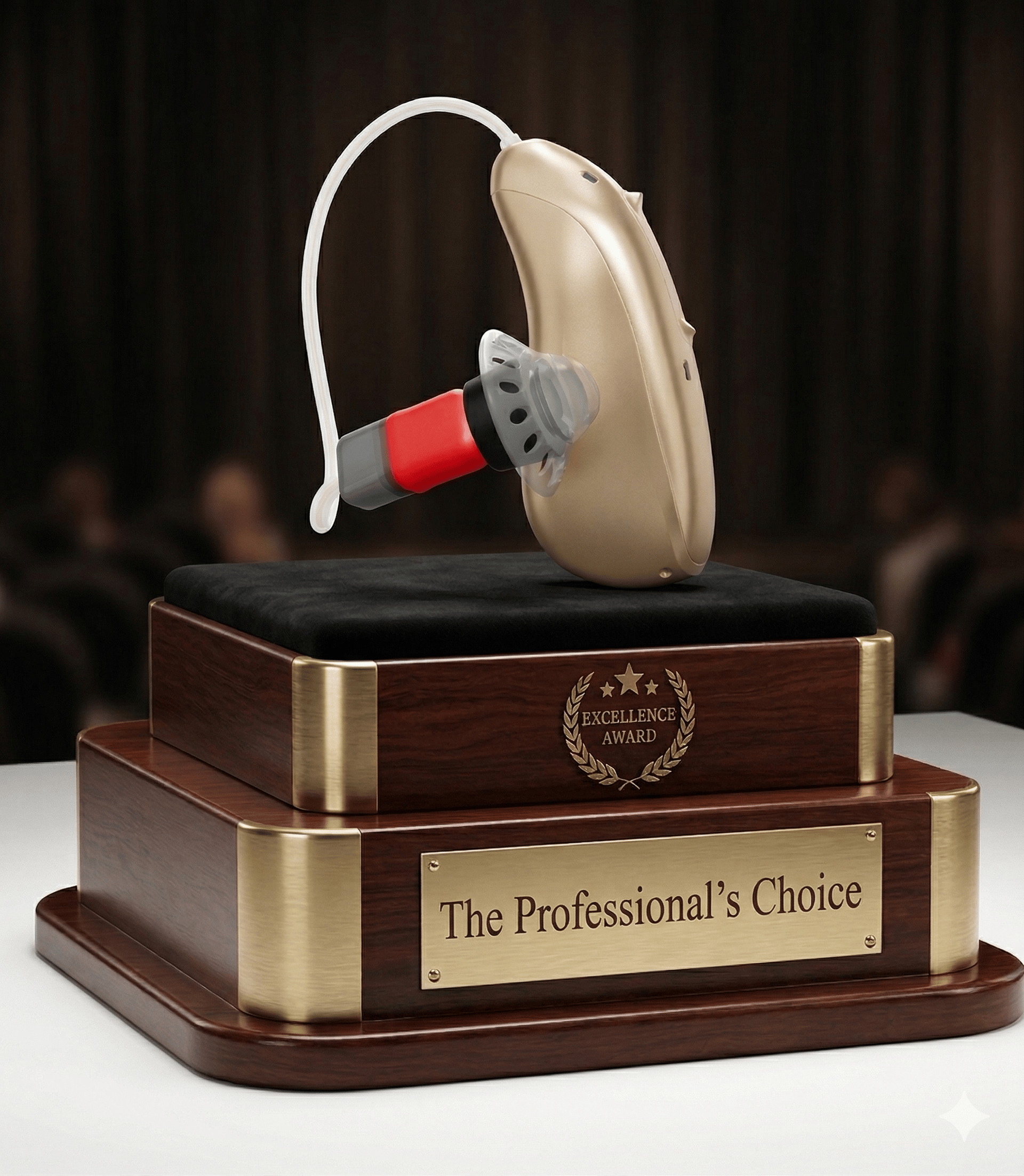
Phonak Audéo Infinio Sphere stood out for a different reason: it received the most #1 votes from the hearing providers we surveyed. That matters because providers see how these devices perform across a wide range of patients and listening situations, not just in controlled test conditions.
It is also one of the most discussed hearing aids in the industry right now, and unlike some heavily marketed launches, this one appears to have real substance behind the attention. In our view, it combines strong professional confidence with serious performance credibility.
#3: Starkey Omega AI
The High-Potential Newcomer
A newer entry with promising early results and the kind of sound quality that tends to get the attention of both wearers and hearing providers.
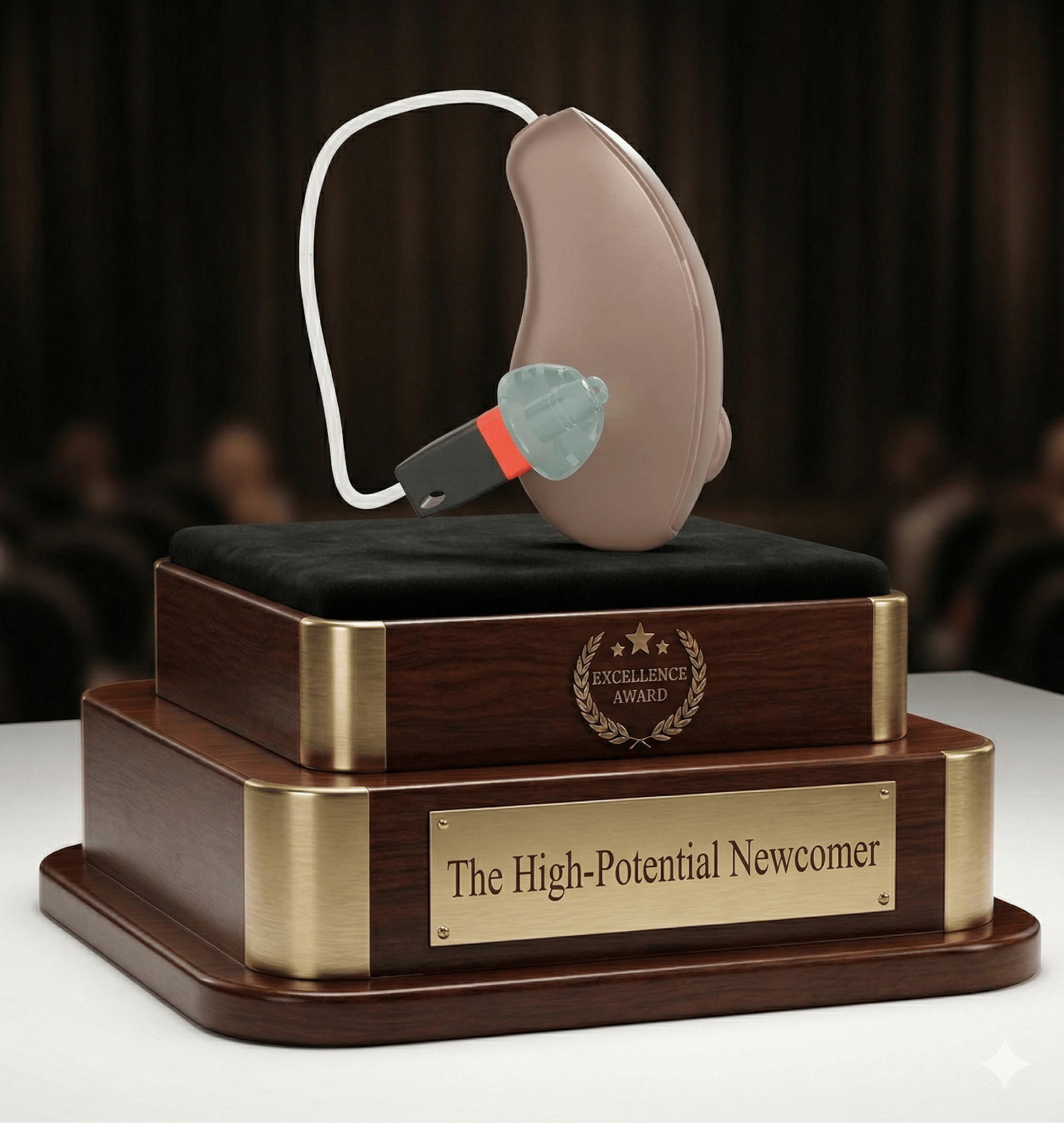
Starkey Omega AI ranks third not because the early signs are weak, but because it is simply newer and the sample size is still smaller than the other two. That makes it harder to give it the same level of confidence as models with more mature data behind them.
Still, the early read is very encouraging. So far, it looks like a hearing aid with real upside, and it would not be surprising to see it climb over time as more real-world data comes in.
How We Ranked These Hearing Aids
Let me give you a little context on the five categories behind this ranking.
1. Customer Reviews
Three weeks after purchase, customers are invited to review their hearing aids. We want the good, the bad, and everything in between.
We compensate people for their time—not for saying something nice. That distinction matters, because honest negative feedback is just as useful as positive feedback.
2. Return Rates
Every customer gets a 45-day trial period with the option to return their hearing aids for a full refund.
That makes return rate one of the cleanest signals in this entire analysis. If people are giving a product back, that means something. If they’re keeping it, that means something too.
Lower return rate is better.
3. Head-to-Head Comparison Results
This one is especially interesting.
Sometimes a customer tries one hearing aid, then compares it against another model during the trial period. If they ultimately keep one and return the other, we count that as a “win” for the one they kept.
That gives us a direct, real-world look at what happens when two products go toe-to-toe.
4. Independent Lab Testing
We also factored in testing from HearAdvisor, an independent third-party lab that evaluates hearing aids in controlled conditions.
That matters because manufacturer claims are one thing. Independent testing is another.
5. Provider Survey Results
Finally, we asked hearing providers in our network—providers who have actually fit all three of these products—to rank them based on their real-world experience.
That adds a layer of clinical perspective you don’t get from spec sheets or marketing brochures.
So How Did We Turn All That Into a Final Ranking?
There’s no perfect way to weight this kind of data.
Some people will care more about return rates. Others may put more stock in lab testing. And sample sizes are not identical across every product, especially when one model is newer than another.
So rather than impose our own personal weighting on the categories, we fed the data into five different large language models and asked each one to mathematically rank the products from 1 to 3.
Not based on opinion. Based on the numbers.
And when we combined those rankings, the order that showed up most consistently was 1) Oticon Intent, 2) Phonak Audéo Sphere Infinio, and 3) Starkey Omega AI.
Before You Make Too Much of This Ranking…
I want to be careful here.
Even if a hearing aid ranks #1 on this page, that does not automatically mean it’s the best hearing aid for you.
That’s because hearing aids are not like picking the “best TV” or the “best blender.” A hearing aid has to match your hearing loss, your listening needs, your comfort preferences, and just as importantly, the skill of the provider fitting it.
I’ve seen plenty of situations where someone gets better results from a technically lower-ranked product simply because it was fit by a provider who really knows that manufacturer’s software inside and out.
So use this page as a guide. A very useful guide, I think. But not as gospel.
So… Which One Should You Choose?
That depends.
I know that’s not a great answer, but it’s the honest one.
If you want the best all-around performer based on the data we analyzed, Oticon Intent has the strongest case.
If you want one of the most technologically ambitious hearing aids on the market—especially for speech in noise—Phonak Sphere Infinio deserves a very hard look.
And if natural sound quality in the smallest device possible is at the top of your priority list, Starkey Omega AI may end up being the one that feels best to your ears.
The margins between these top three are not enormous. These are all excellent hearing aids.
The bigger mistake would be assuming there’s one universally “best” hearing aid for every person in every situation.
There isn’t.
My Best Advice
When you decide to try hearing aids, work with a provider who gives you room to compare.
Because no one—not me, not you, not the manufacturer—can know with certainty which hearing aid you’ll do best with until you actually wear it in your real life.
That means your kitchen. Your car. Your grandkids. Your church. Your favorite restaurant. Your daily routine.
That’s where the truth shows up.


