


Phonak Audéo EON Sphere: Phonak’s Best Hearing Aid Just Got Smaller

Hearing Aid Specialist

Brad Ingrao
Editor & Doctor of Audiology
In August 2024, Phonak released the Audéo Sphere Infinio, and it quickly became one of the most successful premium hearing aids on the market. The reason was pretty simple: it did something meaningfully different.
For decades, hearing aids have relied largely on directional microphones and human-written algorithms to separate speech from background noise. Sphere added a dedicated deep neural network processor that could analyze sound and separate speech from noise in real time. Over the last two years, Sphere has crushed it in the market, and the independent testing has largely backed up the hype. HearAdvisor currently names Sphere Infinio its Best for Background Noise hearing aid, with particularly strong speech-in-noise results in its laboratory testing.
Now Phonak is back with the next generation, Phonak Audéo EON Sphere.
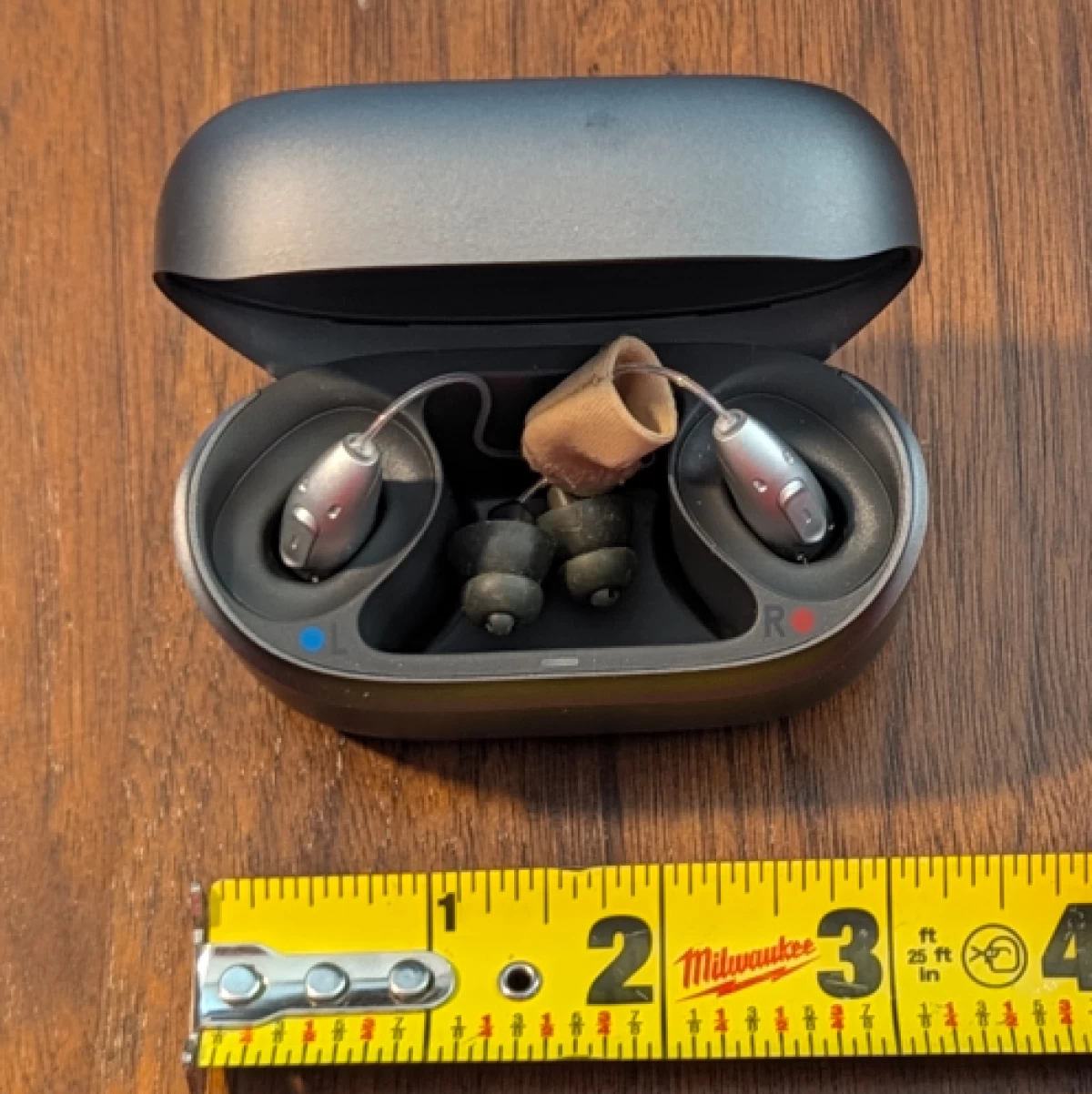
And apparently, Sphere spent the last two years on a GLP-1. The new model is 25% smaller and 20% lighter than the original, while its new dedicated AI processor is 37% more power efficient. Phonak has also introduced Spheric Speech Clarity 3.0, updated its automatic sound processing, substantially upgraded wind-noise reduction, and added Auracast broadcast audio.
EON Sphere is a rechargeable receiver-in-canal hearing aid available in 90, 70, and 50 technology levels, with receiver options capable of fitting hearing losses ranging from mild to profound. It comes in eight colors: Sand Beige, Sandalwood, Chestnut, Champagne, Silver Gray, Graphite Gray, Velvet Black, and a new Sienna Red.
Those improvements are important because the original Sphere had two legitimate weaknesses. It was larger than most competing receiver-in-canal hearing aids, and battery life could suffer when its deep neural network was working hard. EON is largely about making the technology that already worked very well smaller and more efficient.
Smaller Design & HYPERSONIC Chip
The most obvious change is size. The original Sphere wasn't enormous, but it was noticeably larger than most modern RIC hearing aids because Phonak had to make room for both its normal hearing aid processing and the dedicated hardware used to run its deep neural network.

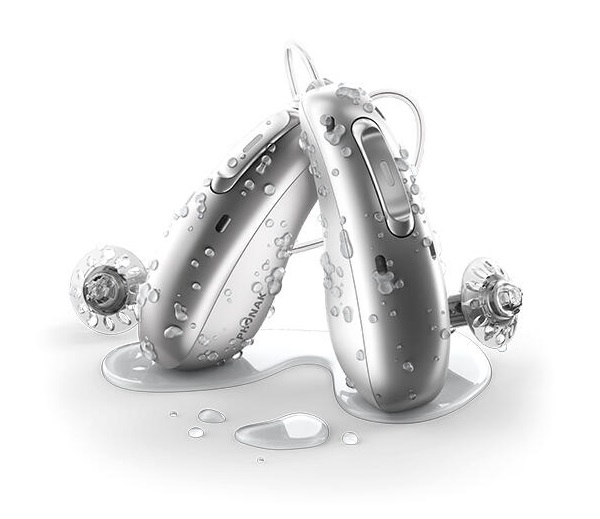
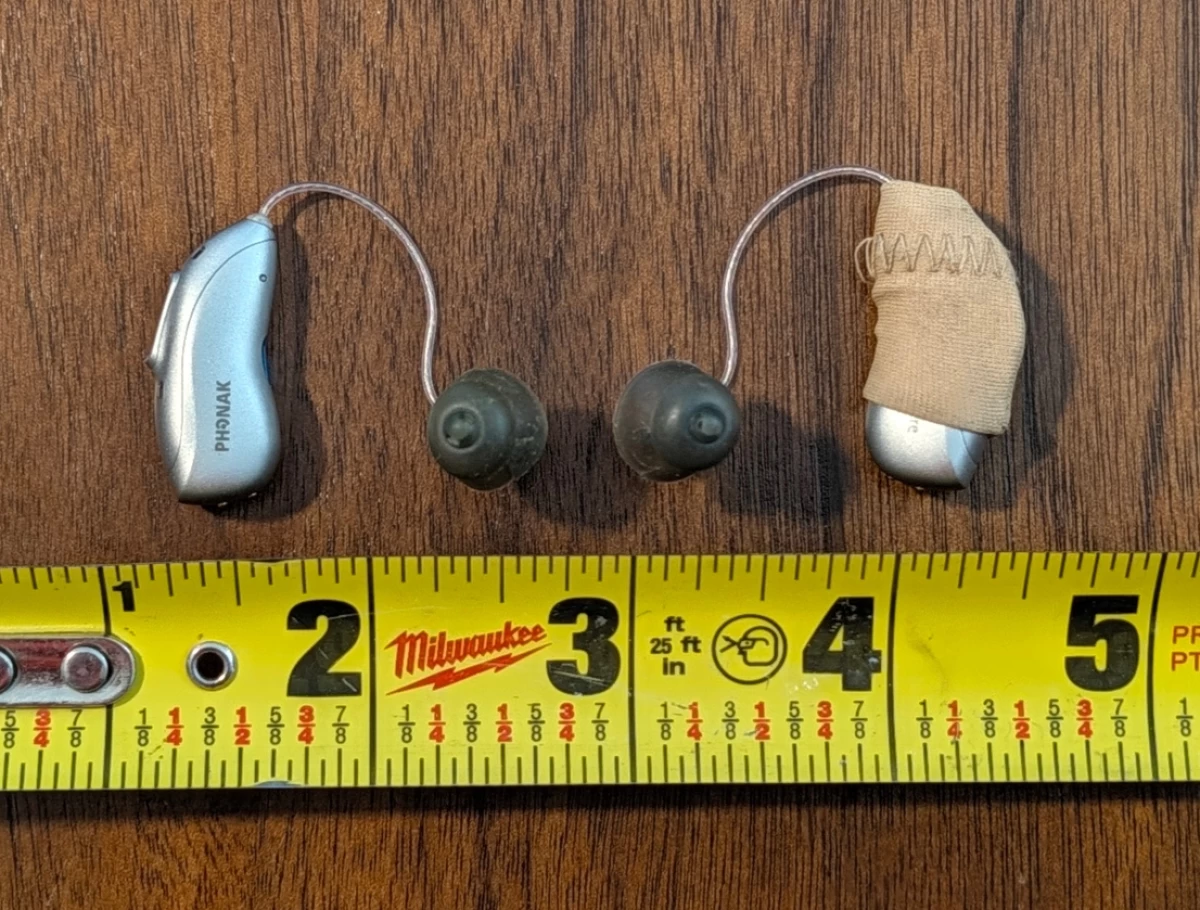
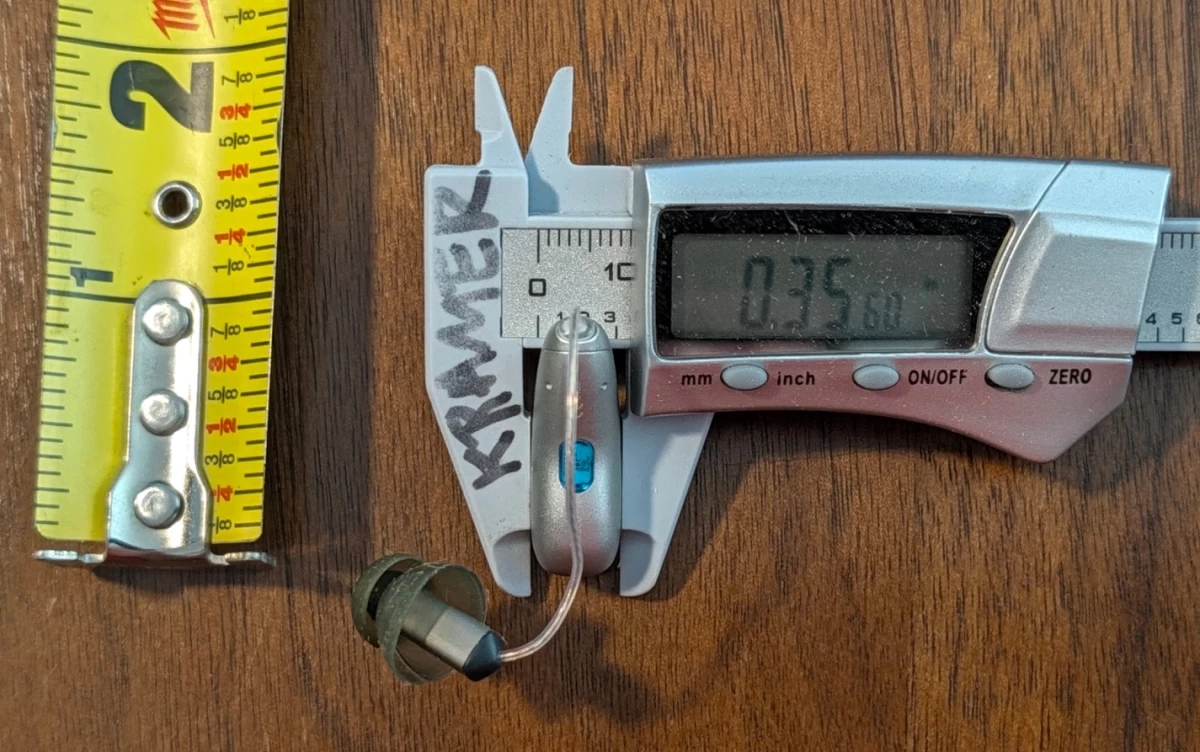
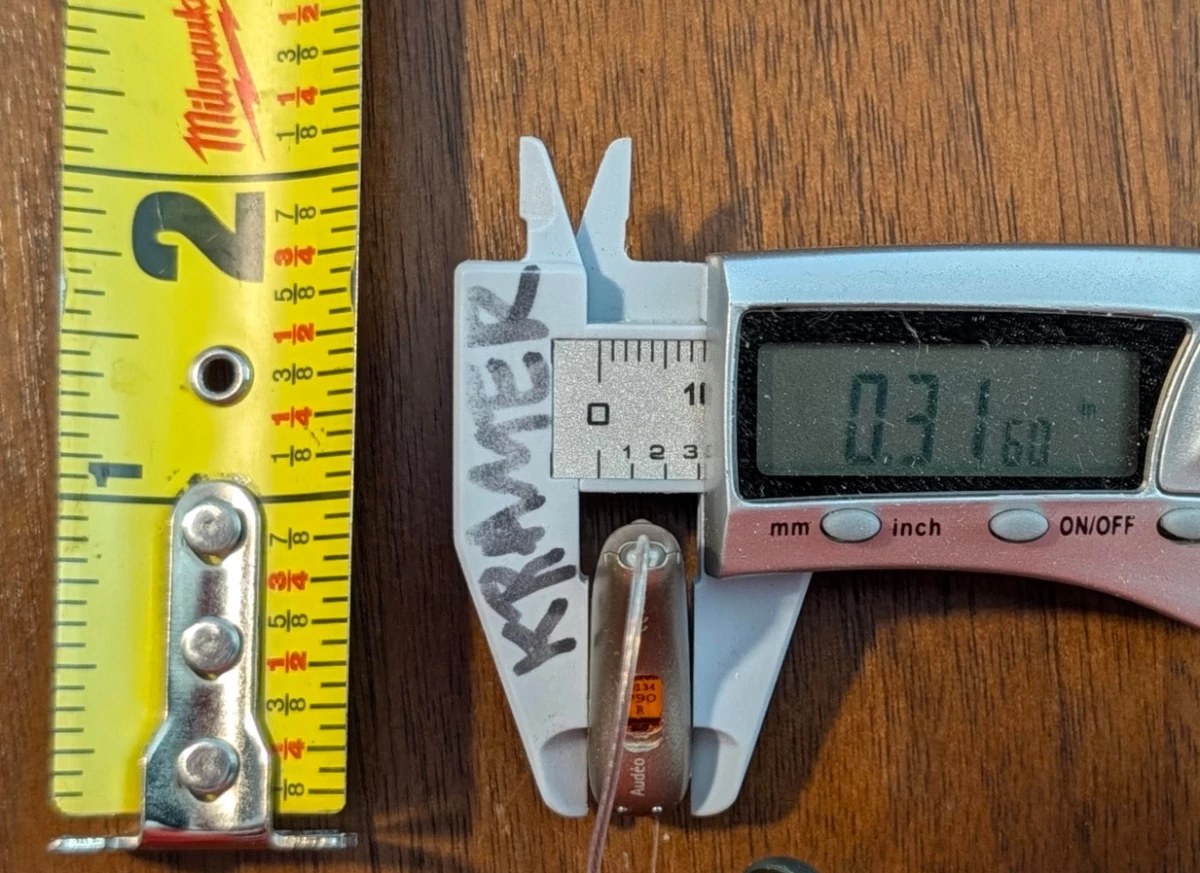
EON Sphere measures approximately 28.7 mm tall, 12.6 mm wide, and 8.9 mm deep, and weighs 2.4 grams. Phonak says that makes it about 25% smaller and 20% lighter than its predecessor. A few millimeters might not sound significant, but when something lives behind your ear for 12 or 16 hours every day, it matters.
The hardware making much of this possible is a new dedicated AI chip called HYPERSONIC.
You can think of a traditional hearing aid processor as the main brain of the device. It has to manage amplification, feedback cancellation, directional microphones, Bluetooth, environmental classification, and dozens of other jobs happening in the background. Sphere adds specialized processing for one particularly difficult task: separating speech from noise in real time.
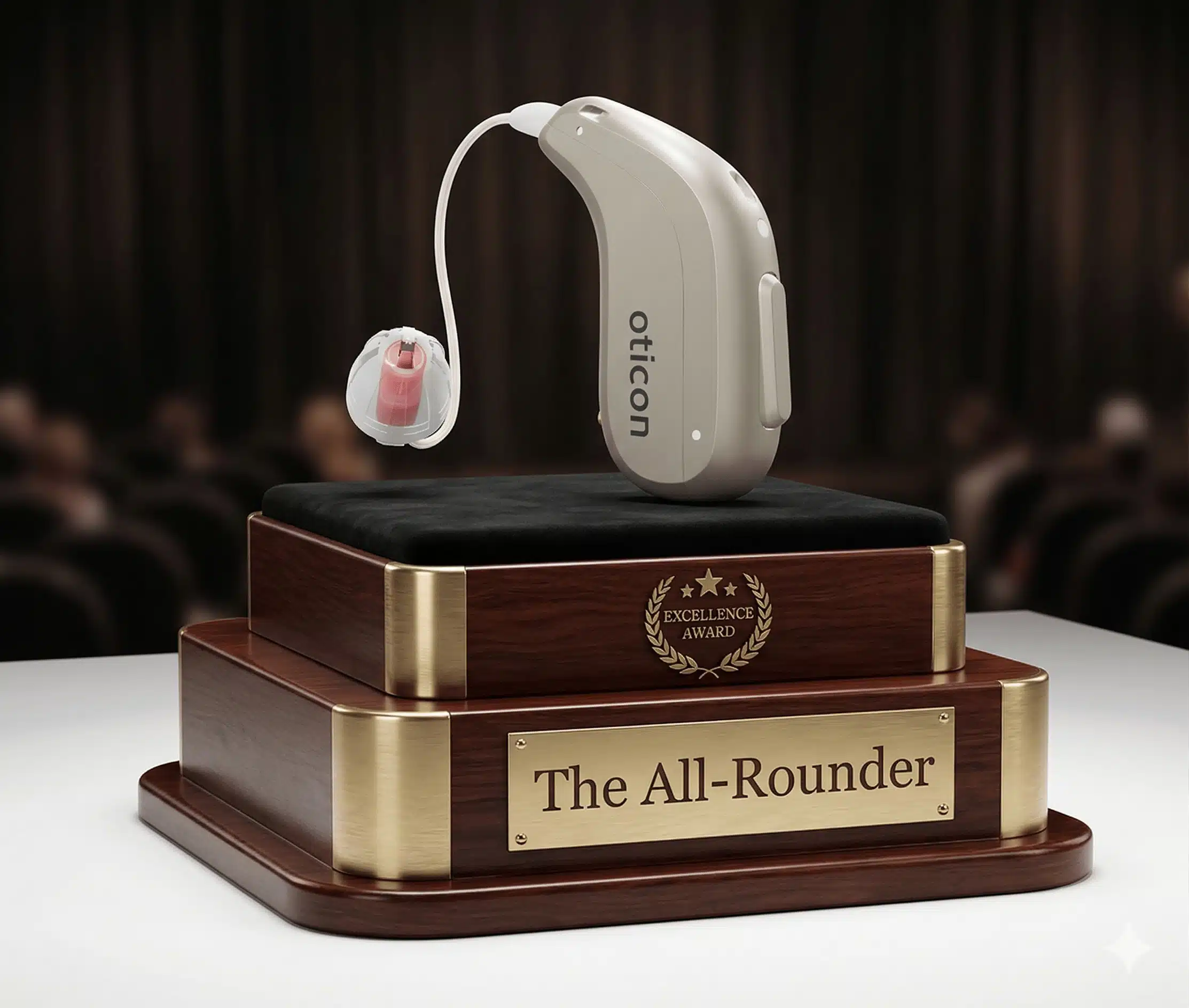
Interestingly, Phonak isn't alone in moving further in this direction. Oticon also announced its new Reveal hearing aid this week, built around what it calls Dual AI. Reveal uses two fully integrated AI systems—Speech AI and Context AI—with one focused on speech and the other helping preserve the surrounding sound context.
The implementations are different, so I wouldn't call Reveal and Sphere the same architecture. But I do think the broader trend is worth watching. Manufacturers are increasingly using specialized AI systems for specific listening problems rather than asking one collection of traditional algorithms to do everything.
In EON Sphere, HYPERSONIC makes Sphere processing 37% more power efficient, which is important because real-time neural network processing requires a lot of computing power, and computing power uses battery.
Spheric Speech Clarity 3.0
HYPERSONIC powers Phonak's latest speech-in-noise technology, Spheric Speech Clarity 3.0, and this remains the main reason I'd consider Sphere over the standard EON R.
Traditional directional microphones improve speech understanding by focusing more heavily on sound coming from a particular direction, usually in front of you. That's useful when the person you're talking to is sitting directly across from you, but conversations in the real world don't always cooperate.
Think about sitting around a restaurant table. Someone is across from you, another person is on your left, somebody else is on your right, and there's noise coming from all directions. Traditional directionality has to decide where to focus.

Spheric Speech Clarity approaches the problem differently. Its deep neural network analyzes the incoming sound and tries to distinguish speech from noise, allowing Sphere to enhance speech coming from multiple directions rather than simply narrowing its focus toward one area.
Phonak says the DNN inside Spheric Speech Clarity 3.0 is now 16% more efficient than the previous version. The company also says users are up to 2X more likely to understand every word from any direction with Spheric Speech Clarity compared with the same hearing aids without the feature activated. As always, that's manufacturer research under specific test conditions, and your results will depend on your hearing loss, fitting, and environment.
One of the more interesting changes with EON is that Sphere is now available at the 50 technology level. Previously, getting Sphere meant buying into one of Phonak's higher tiers.
There are meaningful differences between the three EON Sphere levels. On the 90 and 70, Spheric Speech Clarity can activate automatically when the hearing aids recognize the appropriate listening environment. On the 50, it has to be activated manually. Phonak also varies the amount of denoising, with moderate strength on the 50, high strength on the 70, and the highest strength on the 90.
So, the Sphere 50 isn't simply a cheaper Sphere 90. Still, bringing the dedicated DNN processing down to the 50 level should make this technology accessible to more people.
AutoSense OS AI 8.0 & WindBlock 2.0
Phonak's automatic environmental system has also been updated to AutoSense OS AI 8.0. AutoSense is constantly analyzing your surroundings and deciding whether you're in quiet, speech in noise, music, a car, or another listening environment, then changing the hearing aid processing accordingly.
One change with EON is particularly practical. Phonak has changed the exit criteria for its Spheric Speech in Loud Noise program, meaning it now takes a larger change in the listening environment before the hearing aids automatically leave that mode.
Imagine you're sitting in a noisy restaurant and the room briefly gets quieter. You don't necessarily want the hearing aids immediately deciding that the difficult listening situation is over and shutting off the more aggressive speech processing, only to turn it back on 30 seconds later. EON should be less eager to do that, which ought to make the automatic system feel more stable in environments where noise levels are constantly changing.
Phonak has also introduced WindBlock 2.0. Anyone who has worn hearing aids outdoors knows how disruptive wind can be. Air moving across the microphones creates that familiar rushing sound, which can quickly overpower speech.
Phonak says WindBlock 2.0 can reduce wind noise by up to 50 dB and improve signal-to-noise ratio by up to 30 dB compared with the feature turned off. Those are large numbers, and the words up to are important, so I'd like to see how it performs outside the lab. Still, for golfers, walkers, cyclists, and people who spend a lot of time outside, this could be one of the more noticeable everyday improvements.
Auracast Connectivity
EON also adds Auracast broadcast audio to Phonak's already broad connectivity offering.
If you're unfamiliar with Auracast, think of it as a way for public venues to broadcast audio directly to compatible hearing aids and headphones. An airport, theater, lecture hall, museum, gym, or church could make an audio stream available, and people nearby could connect to it through their own devices.
For example, instead of trying to decipher an airport gate announcement through a bad ceiling speaker, you could potentially stream that announcement directly into your hearing aids.
With EON, Phonak says you can connect to compatible Auracast broadcasts by scanning a QR code through the myPhonak app, or through an Auracast assistant on a compatible smartphone.
Auracast is still rolling out in the real world, so I don't think it's a reason by itself to replace otherwise good hearing aids. But hearing aids are often worn for five years or longer. I'd rather have Auracast built into a hearing aid today than wish I had it three years from now.
Battery Life
Battery life is an area I'm particularly interested in testing with EON because it was one of the legitimate criticisms of the original Sphere. Real-time DNN processing is computationally expensive, and heavy Sphere use could take a meaningful bite out of battery life.
Phonak lists 22 hours of expected operating time for Audéo EON Sphere, with a maximum operating time of 38 hours, depending on active features, streaming, hearing loss, battery age, and the sound environment. A full charge takes approximately 2.5 hours; one hour gets the battery to around 55%, while two hours gets it to approximately 90%.
The 37% improvement in Sphere processing efficiency is encouraging, but I'm not ready to say battery life is completely "fixed" based on a spec sheet alone. What matters is how long EON lasts on a long day when Spheric Speech Clarity is actually being used heavily. That's something we'll know more about after real-world testing.
My Take
For the last two years, the original Sphere model has crushed it. It has been one of our most popular premium hearing aids, and the independent testing has supported its reputation as one of the best options available for people whose biggest complaint is hearing in background noise. HearAdvisor currently lists the original Sphere Infinio as its Best for Background Noise pick and measured particularly strong speech-in-noise performance.
That success didn't come without some daggers from competitors, and two of the criticisms were fair. Sphere was big, and battery life under heavy DNN use was a legitimate weak point.
Those are also the two areas I'm happiest to see Phonak address with EON. The hearing aid is now 25% smaller and 20% lighter, and HYPERSONIC makes Sphere processing 37% more power efficient. The size issue has clearly been addressed. On battery life, the improved efficiency is promising, but I want to see what it translates to with heavy real-world Sphere use before declaring victory.
More broadly, the fact that Oticon is launching Reveal with its own Dual AI approach at the same time tells me we're entering the next phase of premium hearing aid development. The question is increasingly becoming not whether a hearing aid uses AI, but what the AI is doing, how specialized it is, and whether it actually helps when listening gets difficult. Oticon's official Reveal materials describe two integrated AI systems dedicated to speech and contextual sound, which makes that shift pretty clear.
Phonak didn't need to reinvent what Sphere already did well. It needed to make the product smaller, more efficient, and easier to live with. EON appears to do exactly that while also bringing Sphere processing into the more affordable 50 technology level.
Assuming its speech-in-noise performance holds up in independent testing, I expect Audéo EON Sphere to be one of our top two best-selling hearing aids for the foreseeable future.
The original Sphere proved that people were willing to accept some compromises to get exceptional performance in background noise. EON Sphere looks like Phonak's attempt to remove more of those compromises without messing with the reason people bought Sphere in the first place.

->getDescriptorURL()?>)







![Preview for the "Phonak Hearing Aid Models & Prices [2026 Version]" video](https://cdn.ziphearing.com/dist/dynamic/files/videos/365/thumbnail/version/1/1200/thumbnail.avif "Phonak Hearing Aid Models & Prices [2026 Version]")

![Preview for the "Oticon Hearing Aids Models and Prices [2026 Version]" video](https://cdn.ziphearing.com/dist/dynamic/files/videos/400/thumbnail/version/1/1200/thumbnail.avif "Oticon Hearing Aids Models and Prices [2026 Version]")