

Best Rechargeable Hearing Aids of 2026: The Models That Last All Day and Sound Good Doing It
We've analyzed multiple data points to find the overall best rechargeable models of 2026.

Published April 10, 2026
Updated August 5, 2026
RANKINGS YOU CAN TRUST
ZipHearing is a network of nationwide hearing providers. We don’t just review these premium models; we partner with over 600 local audiology practices nationwide to dispense and fully program them at pre-negotiated discount rates. You get the exact technology ranked below, paired with local, hands-on care, for thousands less than retail, by visiting our home page.
Tired of changing tiny hearing aid batteries?
We don’t blame you.
They roll off the counter, disappear into the carpet, and always seem to die at the worst possible time. They also create a steady stream of waste and are dangerous if swallowed by a child or pet.
With nearly every other device in our lives now being rechargeable, including smartphones, watches, and earbuds, it was only a matter of time before hearing aids followed suit.
And they have.
Rechargeable hearing aids have gone from being a nice optional upgrade to the default choice in many manufacturers’ flagship product lines. Some of the newest hearing aids aren’t even offered with disposable batteries.
Why the shift to rechargeable hearing aids?
Part of it is simply convenience. Instead of fumbling with a battery door every few days, you place your hearing aids in a charger before bed and wake up with a full day of power.
But there’s another factor at work: modern hearing aids are doing far more behind the scenes than they did even five years ago. They are constantly analyzing the sound environment, separating speech from noise, communicating with smartphone apps, tracking movement, and, are now more often than not running deep neural networks in real time.
Rechargeable designs also allow manufacturers to seal the hearing aid more completely. Without a battery door that needs to be opened every few days, there are fewer entry points for moisture, dust, sweat, and debris. That can help improve water and dust resistance, which is especially important for a device that sits on your ear all day, exposed to heat, humidity, rain, and the occasional accidental splash.
Lithium-ion batteries also provide a steady, predictable power source for all of that processing and wireless connectivity. While disposable-battery hearing aids are still available, rechargeable models give manufacturers more flexibility to build powerful, compact, and better-sealed devices without asking the wearer to replace tiny batteries every few days.
That’s a pretty compelling trade.
But not every rechargeable hearing aid is created equal. A hearing aid may be technically rechargeable and still leave you scrambling for an outlet before dinner.
To identify the best rechargeable hearing aids of 2026, we looked at four criteria.
How We Chose the Best Rechargeable Hearing Aids
1. Battery Life
This is the obvious one.
If a hearing aid cannot reliably get you through your day, it doesn’t really matter how good the app looks or how many AI buzzwords appear in the brochure. It’s probably not going to be a good fit.
We looked at the advertised battery life of each hearing aid, paying close attention to how streaming and advanced features might affect real-world performance.
Keep in mind that manufacturer estimates are just that, estimates. Your actual battery life will depend on several factors, including:
- How many hours per day you wear your hearing aids
- How much audio you stream
- The severity of your hearing loss
- The power level of your receivers
- Which sound-processing features are active
- The age and condition of the battery
Every hearing aid we reviewed offers more than 20 hours of battery life without streaming, so you may wonder why a 40-hour or 50-hour rating even matters. After all, very few people are going to wear their hearing aids for 20 hours straight.
The reason is headroom. Lithium-ion batteries gradually lose some capacity as they age and go through repeated charge cycles. We would not expect every battery to lose half its capacity after three or four years, but some decline over time is normal. Starting with a larger battery cushion gives you a better chance of maintaining reliable all-day power later in the hearing aid’s life.
2. Quick-Charge Capabilities
Even people with the best nighttime routines occasionally forget to charge their hearing aids.
Maybe the hearing aids weren’t seated correctly in the charger. Maybe the charger was accidentally unplugged. Or maybe you fell asleep on the couch while still wearing them.
It happens.
That’s why quick charging matters.
In a worst-case scenario, you should be able to place your hearing aids in the charger for a few minutes and get enough power to make it through an appointment, dinner, or an important conversation.
Some current hearing aids can provide several additional hours of use from just 15 to 30 minutes of charging. For example, Oticon advertises up to four hours of use from a 15-minute charge on certain chargers, although real-world results vary according to the fitting, feature use, streaming, and battery age.
We rewarded hearing aids that could recover quickly, not just those that eventually reached a full charge.
3. Independent Lab Testing Results
Finally, and most importantly, the hearing aids still have to help you hear.
A hearing aid could last for three days, recharge in five minutes, and come with the most beautiful portable charger ever made. But if it falls apart acoustically in a crowded restaurant, it’s hard to call it the best hearing aid.
For sound performance, we used the HearAdvisor SoundScore.
SoundScore is a 0-to-5 rating based on independent laboratory testing. Rather than relying on manufacturer claims, HearAdvisor places hearing aids through controlled acoustic tests designed to represent real listening situations.
The overall score considers five areas:
- Speech benefit in quiet and moderately noisy environments
- Speech benefit in loud environments
- Own-voice quality
- Feedback or whistling control
- Streaming music quality
The individual results are then combined into one consumer-friendly score, with speech performance receiving the greatest weight.
Of course, no laboratory score can predict exactly how a hearing aid will perform for every person.
Your hearing loss, ear anatomy, acoustic coupling, programming, and professional fitting all matter. A hearing aid with a slightly lower SoundScore could still be the better choice for your particular hearing loss or lifestyle.
But independent testing gives us something manufacturer brochures usually don’t: a standardized way to compare sound performance across brands.
Our Choice for the Best Rechargeable Hearing Aid of 2026: Starkey Omega AI
Based on the data, our choice for the best rechargeable hearing aid of 2026 is Starkey Omega AI.
| Hearing Aid | Battery Life | Battery Life w/ 3 hrs Streaming | Power From 15-min Charge | SoundScore |
| Starkey Omega AI | 51 hrs | 45 hrs | 4.5 hrs | 4.3 |
| Phonak Audéo Sphere Infinio | 56 hrs | 17 hrs | 3 hrs | 4.6 |
| Oticon Intent | 22 hrs | 17 hrs | 4 hrs | 4.7 |
| ReSound Vivia | 30 hrs | 27 hrs | 3.75 hrs | 3.9 |
| Widex Allure | 30 hrs | 27 hrs | 2 hrs | 4.5 |
| Signia Pure Charge&Go IX | 39 hrs | 36 hrs | 3 hrs | 4.4 |
Omega AI provides an estimated 51 hours of battery life without streaming and 45 hours with three hours of streaming. That is the best streaming battery performance of any hearing aid in our comparison, and it isn’t particularly close.
It also performed best in our quick-charge comparison, providing approximately 4.5 hours of additional power from a 15-minute charge.

Starkey Omega AI Hearing Aids Review & Features Explained (2025 Model)

On October 9, 2025, at its annual Starkey Days event in Eden Prairie, Minnesota, Starkey unveiled its newest flagship hearing aid: Omega AI. This mode...
One advantage that does not show up in the chart above is size. The Omega AI packs all of that battery life into a remarkably compact body. Placed side by side with the Phonak Audéo Sphere Infinio and Oticon Intent, Omega AI has a noticeably smaller footprint. That matters because exceptional battery life often comes at the cost of a bulkier hearing aid. With Omega AI, you are not being asked to wear a larger device to get that extra power.
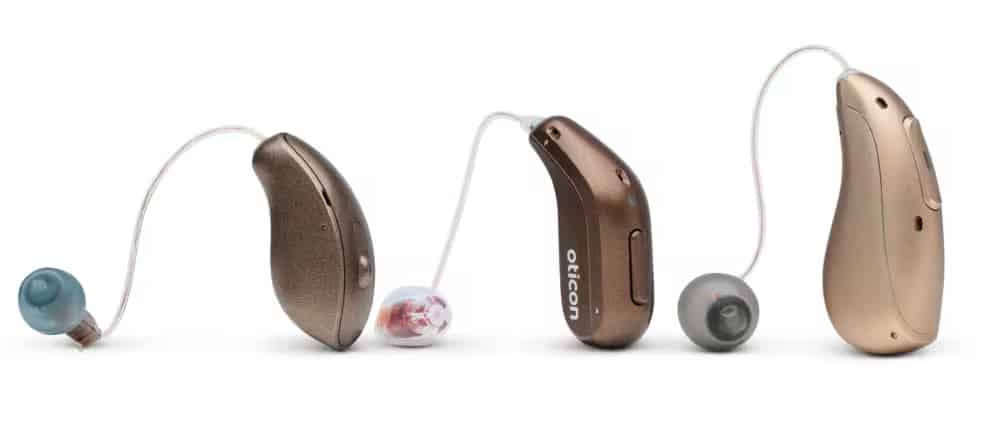
Its 4.3 SoundScore falls slightly behind some of the other hearing aids on this list, including Oticon Intent and Phonak Sphere. But when we consider all of the criteria together, Omega AI offers the best overall combination of battery life, emergency charging, and sound performance.
Phonak Sphere earned a higher 4.6 SoundScore and offers an impressive 56 hours without streaming. However, its estimated battery life drops to just 17 hours with three hours of streaming. Oticon Intent scored highest for sound, with a 4.7 SoundScore, but its overall battery life is considerably shorter.
For someone who streams music, takes phone calls through their hearing aids, or simply wants the greatest possible battery cushion, Omega AI is the most complete rechargeable package in this group.
The Bottom Line
Rechargeable hearing aids have reached the point where most people no longer need to choose between convenience and performance.
The best models can comfortably last through a full day, recover several hours of power from a brief emergency charge, and recharge inside portable cases that function much like wireless-earbud cases.
But battery specifications only tell half the story.
The goal isn’t simply to find a hearing aid that stays turned on the longest. It’s to find one that stays powered throughout your day and helps you understand the people who matter while it’s doing it.
Based on our combination of battery life, quick charging, portable charging, and independent sound testing, the Starkey Omega AI is the rechargeable hearing aid that does that best in 2026.
One Final Note...
The most important feature of your next hearing aid isn't a tech spec—it’s your trial period. We believe you shouldn’t have to "guess" with a multi-thousand-dollar investment.
That’s why at ZipHearing, we offer a 45-day, 100% risk-free trial. You can take any of these top-ranked models home and wear them for over a month. If they don’t change your life, or if you simply want to try a different brand on this list, you can return them to your local provider for a 100% refund. No restocking fees, no fine print, and no "gotchas."
We’ve partnered with over 600 local hearing specialists nationwide to ensure you get professional, face-to-face care near your home. We give you the data to make an informed choice, and the trial period to make a confident one.
Ready to start your 45-day trial? Here is the simple path to better hearing:

Click here to check your location, or simply call us at 800-731-6794. We'll answer your questions and let you know your local ZipHearing providers are.

At your convenience, call your local ZipHearing provider and schedule your hearing aid consultation. You'll discuss hearing aid options, and if you want, place an order.

Just days after your consultation, pick up your custom-ordered hearing aids and get them programmed to your unique hearing profile. If you don't love them, return them for a 100% refund.
Watch Now: Save Thousands on the Best Rechargeable Hearing Aids


